
WHY WE WEAR IT: CLOTHING AS IDENTITY By Stephanie Alvarez

Before we speak, our clothing has already begun to communicate. Colors, shapes, fabrics, and styling choices can reveal pieces of our identity and life experience. Fashion comes in countless forms, but at its center is a basic human desire: to express ourselves and feel recognized by others.
When I think about clothing that makes an immediate statement, I think about Thierry Mugler’s dramatic work in the 1990s. The sculpted silhouettes and almost extraterrestrial shapes feel larger than life, yet they also show how clothes can help someone step into a different version of themselves. Fashion can be playful, theatrical, protective, or completely personal. It does not have to mean the same thing to every person.

STYLE AS A SHARED LANGUAGE
Clothing can also build community. People gather around shared styles connected to music scenes, cultural traditions, social movements, and everyday experiences. What we wear can quietly say, “I understand this reference,” or “I belong here.” Style does not create a community on its own, but it can make that community visible.
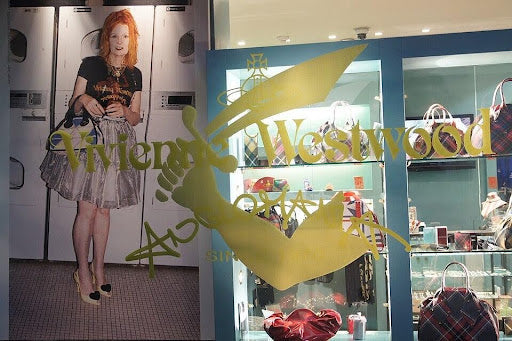
Punk is a clear example. In mid-1970s Britain, Vivienne Westwood and Malcolm McLaren helped shape the look associated with the movement through their shop at 430 King’s Road in London. Ripped fabrics, loose knits, safety pins, provocative graphics, and bondage-inspired trousers rejected the polished expectations of mainstream fashion. Members of the Sex Pistols wore many of their designs, connecting the clothing directly to the sound and attitude of punk.
Westwood did not invent punk by herself, and punk was bigger than any one designer. Still, her work shows how fashion can capture the energy of a subculture and carry it into the wider world. The punk look communicated rebellion before anyone said a word. Decades later, its influence is still visible in both street style and high fashion.
WHAT HAPPENS WHEN EVERYTHING BECOMES A TREND?
Fashion has always changed with society. Technology, sexuality, art, globalization, and shifting ideas about identity all affect what people wear. That constant evolution is part of what makes fashion exciting. It can reflect society, challenge it, and sometimes help reshape it.
But the speed of fashion today raises a question about authenticity. In the digital age, an underground style can become a global trend almost overnight. Fast-fashion companies can reproduce a look quickly, while social platforms move on to the next aesthetic just as fast. When clothing is treated as disposable, its connection to craftsmanship, history, and personal meaning can become harder to see.
That does not mean trends are automatically bad. Discovering a new style can be fun, and globalization can introduce people to ideas they may never have encountered otherwise. The issue is what happens when inspiration loses its context or when buying something becomes more important than understanding or actually wearing it.
CONSCIOUS FASHION WITHOUT LOSING THE FUN
Being more conscious about fashion does not mean turning every outfit into a research project. It can start with a few simple questions: Do I genuinely like this, or am I reacting to a trend? Will I wear it more than once? Who made it? Is there a version I can buy secondhand, repair, restyle, or keep for longer?
Cultural awareness matters too. Inspiration travels, and fashion has always borrowed and exchanged ideas. The goal is not to build walls around creativity. It is to recognize when a style, symbol, or technique comes from a specific community, learn about its meaning, and give credit rather than treating it as a brand-new discovery.
Consumers cannot fix the entire fashion industry through individual shopping choices. Brands and policymakers carry much of that responsibility. Still, buying with intention, caring for what we own, supporting better practices when possible, and resisting constant overconsumption are realistic places to begin. Conscious participation is less about being perfect and more about paying attention.
HAS FASHION LOST ITS CULTURAL MEANING?
I do not think fashion has lost its cultural significance. Its meaning has changed because the way we discover, buy, and share clothing has changed. Style now travels faster, reaches more people, and can be stripped of context more easily. At the same time, people continue to use clothing to express identity, find community, challenge expectations, and tell stories.
Maybe the answer is not to reject trends or stop enjoying fashion. Maybe it is to slow down just enough to notice what our clothes are saying and to decide whether that message actually belongs to us.
SOURCES & FURTHER READING
Factual references:
• Brooklyn Museum — “Thierry Mugler: Couturissime”
https://www.brooklynmuseum.org/exhibitions/thierry_mugler
• Victoria and Albert Museum — “Vivienne Westwood: Punk, New Romantic and Beyond”
https://www.vam.ac.uk/articles/vivienne-westwood-punk-new-romantic-and-beyond
• United Nations Environment Programme — “Why You Should Rethink Your Next Fashion Purchase”
https://www.unep.org/news-and-stories/story/why-you-should-rethink-your-next-fashion-purchase
Background reading and inspiration:
• Worn Fashion Journal — “The Role of Fashion in Cultural Identity and Expression”
https://wornfashionjournal.com/the-role-of-fashion-in-cultural-identity-and-expression/
• Fashionista Vogue — “What Is Fashion Culture?”
https://fashionistavogue.com/2025/02/what-is-fashion-culture/

0 Comments
There are no comments yet. Be the first one to post one!