
Conservatism of Gender Roles in Ballet by Trinity Oros
By Trinity Oros
Ballet is known to be an old artform, one with beautiful pictures with a repertoire of stories to play, casts and characters that are classics. Yet, with many more contemporary choreographic pieces coming to light, there is still a foundation of how men and women are seen on stage. In rehearsals, the tone is very different from how a ballet dancer’s mindset would be when in performance.

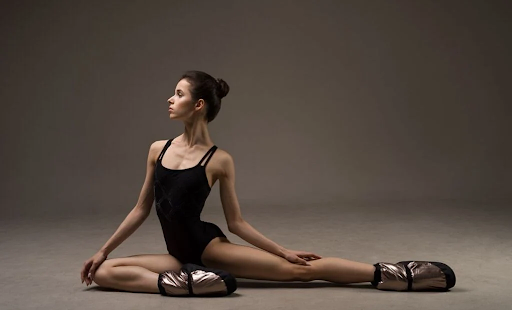
Dancer: Maria Khoreva
Credit: Natalya Sleta
Roles in Rehearsal
Ballet was designed to be seen as a full production. Something that is complete and performed. However, the glimpse into the routine classes and rehearsal studios is where you can first see how gender roles play a part into the culture that ballet creates.
A ballet class is broken down into roughly three parts: Barre, center, and jumps, depending on the style, dancer, or ballet company, pointe shoes will be put on during center, or after classes going into rehearsals.
During class, men and women are often separated once they go into centre practice and jumps. It is often that men and women are given separate exercises and different corrections for the repertoire that they each are expected to perform and shows. While it is not super strict, the practice starts in training in ballet schools. While women take pointe classes, men have specific classes where they learn specialized jumps and turns.
While many occasions have been made to break the barrier, there is still a boundary for how both are expected to move. They may be practicing the same art form, however, the separation from young ages start from a young age.

Roles in Shows:
From the classical standpoint, men and women play specific roles and parts when making a show. Think of the roster as if it were Broadway. Every season, a company will secure the rights to the music and choreography to do a show. From then, the company members will be assigned their characters through cast lists, and then they will be performing those through assigned schedules.
Ballet shows are often romantic or tragic tales, with princes, damsels in distress, and villains that will require both to endure heartbreak, triumph, and resolutions… depending on the ballet. Many ballets like La Bayadere, Manon, and Giselle have unique takes on what makes a hero and what makes a villain. And *spoiler alert* they don’t have happy endings. But having a beautiful woman in distress due to a man lying, cheating, or making a fatal mistake qualifies for solid entertainment.
Ultimately, ballet retains itself as an artform to carry on classic stories of the “sweet, beautiful, innocent, damsel in distress”, and then there is the man she falls in love with. It’s a tale as old as time, and it carries itself as Shakesperean tragedies with great musical scores, all told without saying a single word, instead it is all told by movement. Men move to be strong and powerful. Women are meant to seem like they are practically floating. They are trained to play the characters, and file in line to the gender roles that have been within society from the dawn of time.
The Look of a Ballet Dancer: Body types for Male and Female Dancers
Ballet Body Type for Women:

Dancer: Svetlana Zakarova
There are two major aspects to have as a ballet dancer. Body and facility. Female ballet dancers are expected to be thin and tall, with long limbs and lines galore. While height is not as harsh as a pre-requisite, there are still many old fashioned ballet masters that favor tall dancers over shorter ones. Ballet is a visual art, and what a trained eye looks for is the lines that the body can create. The shaped foot, the high extensions, and the ability to change her movements depending on the music she is dancing to, or the role that she is dancing. The ideal body type is a highly refined version of a 90s supermodel. In ballet, genetics will get you through a lot, however training and facility is still a major requirement.
So, what is facility? Well, it’s everything that makes ballet “easier” or more natural. Turnout, natural flexibility, arches on the feet, anything that can eventuate the line further. Having facility does not mean you have the body, having the body does not mean you have the facility. It is about having both. Many people can train on different aspects to meet the standard on body and facility. (expect height) and both are heavily desired. It is rigid, and there are many stunning, beautiful dancers who have challenged the metric, making the rules change for many other dancers who are hoping to become professionals.

Ballet Body for Men:
Men often have a different standard. They are posed to be athletic and muscular, there is not as much pressure for being something delicate. However, they are often put into more states of undress or are in costumes that have them more exposed. They are mean to be tall, lean, and muscular. Since ballet is always having a shortage of men, having any man in a ballet school is seen as massively successful whether tall or short, as having varying heights allows for proportionate pairings for pas de duex (partnering).
Facility is very similar for women, however, they are much less strict, this is also due to having a disproportionate amount of women to men, with the latter feeling often as a shortage whenever involved. Men are meant to look athletic, and lines are still a major part of the facility. Much of men’s facilities and training are designed for jumps, turns, and partnering.
Men are meant to have a very high amount of strength and stamina, meant to carry women, perform lifts, and have very high energy variations. It’s a higher physical demand at once, while women are meant to do similar amounts, their dancing in comparison is meant to be more controlled.
Essentially, men in ballet is very similar to the body standards that men have outside of the ballet world, however, instead of having big muscles, it is designed to be for lean functionality for demand of the artform itself.

There is much up for debate when talking about the changes being made in the ballet world. The idea of what creates a ballet dancer is being challenged, openly confronting racism, elitism, and gender roles and redefining it with the conservative foundation. A new generation of dancers are singling out good technique, regardless of what anyone looks like. There is still room to grow in the industry, but that is what creativity and art is about. Humanity is captured in artforms, and the evolving nature of humans is what keeps us watching.

0 Comments
There are no comments yet. Be the first one to post one!