
Luke Skywalker’s Chanel Boots: Star Wars and Femininity By Natalie Pool
By Natalie Pool
Looking into the costumes of two of Star Wars’s most influential characters and how they try to accomplish the same goal but differ greatly from each other.

No, Luke Skywalker was not actually wearing Chanel boots in Star Wars: Return of the Jedi. The concept became widely meme-ified after a comparison to the film The Devil Wears Prada, and queer fandoms pointed out that the boots represented a softer, more feminine male character. When it comes to breaking gender roles, Star Wars was one of the first major franchises to do so boldly and without hesitation, despite criticism from audiences and the press. Obviously, Princess Leia was the pinnacle of a strong woman fighting for what is right among a group of men, and she wasn’t afraid to speak her mind to get her way. Her role in the original trilogy was nothing but inspiring, as she is the daughter of a praised senator known for her beauty and poise, and the greatest villain of the story, while being raised by a king and queen on the planet Alderaan.

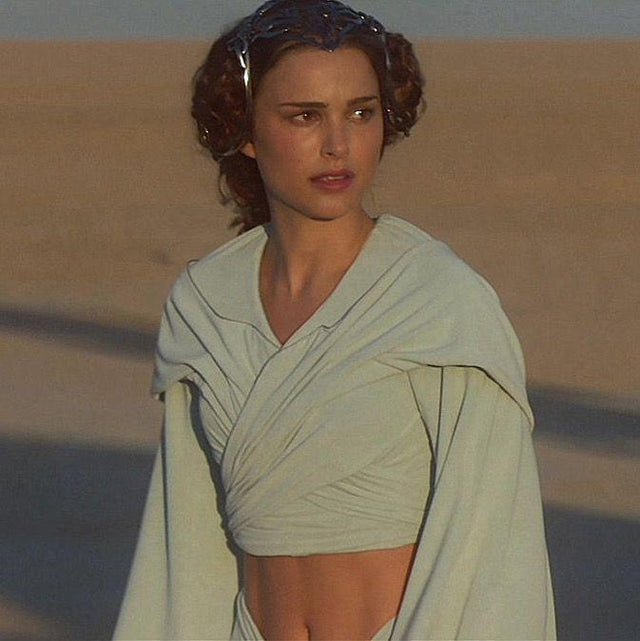
After the release of the original three films, the franchise moved on to its prequel storylines, which centered on the love story of Anakin Skywalker and Padmé Amidala. Padmé, portrayed by Natalie Portman, is the very personification of a woman in a leading role while still maintaining her beauty and poise. Her wardrobe does everything and more to reflect that, as she wears the most luxurious costumes of anyone in the entire franchise. The question is, why wasn’t Leia, a princess, given this same treatment? Carrie Fisher herself, the actress who portrays Princess Leia, called out the difference in costume quality, saying the costumes hid her feminine figure, prompting George Lucas to tell her, “There’s no underwear in space.”

This opens up a broader conversation about why female characters struggle to have appropriate costuming, especially in larger franchises such as Star Wars. Because of the revolutionary nature of Leia as a character, her essence is under a microscope because of how detrimental it is to execute the character correctly, down to her wardrobe. The lack of feminization of her character ultimately suggests that women can’t be strong-willed and feminine simultaneously. Ironically, Leia’s mother, Padmé, has the opposite effect on audiences, as she is a very feminine character in a leading role on her planet of Naboo. Padmé loses her autonomy in the final prequel movie, succumbing to a broken heart over Anakin’s switch to Darth Vader, which is a topic for another day. Still, her costumes remain balanced, showing her power and her beauty in equilibrium.
With Star Wars' comeback among younger generations, it is intriguing to see how Disney, the franchise's owner, will incorporate these critiques into future films. We have seen subtle nuances in these costume differences in the sequel trilogy, particularly in Rey's costume, which alludes to both masculine and feminine aspects of her character, reflecting the balance one can have. From fans deeming Luke Skywalker a feminine guy to Carrie Fisher demanding Leia wasn’t feminine enough, will we ever see the correct amount of each in future franchises? Everyone deserves to have a character they can fully resonate with, without an agenda pushing them to side with one or the other.


0 Comments
There are no comments yet. Be the first one to post one!