
Sustainability and Fashion: The Laney Jean Interview By Kayla Doria Ward
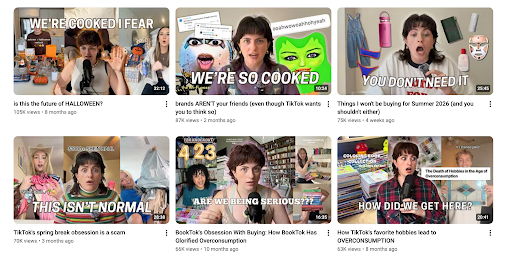

Laney Jean started uploading to YouTube in 2019. This past year, Jean has grown her channel to an inclusive community of 14,600 subscribers (as of June 15th, 2026). How did she see such change and interaction with her channel in just under a year, though? I sat down with her to talk about her journey to and with YouTube, sustainability, video essay research, trends, and brands.
Introductions
LJ: Hi, I'm Laney Jean. I'm 22 years old. I'm a YouTuber and sustainability creator. I'm just someone who likes to share my life on the internet.
KW: Can you tell me about your journey from your hometown to where you are now?
LJ: I'm originally from Wisconsin. I moved to New York for school when I turned 18, came here for college and dance. I ended up staying because auditions are here, and as soon as I knew what New York was when I was a kid, it was like, oh, that's where I'm going to be. So it was just figuring out how to get here, and school was kind of the step through the door.
KW: Do you have any influences, either from back home or that you've met in New York, that drive you and inspire you?
LJ: I would say the people that inspire me the most are the people closest to me. My parents and my brother have always been so encouraging of the things I do. Everything I have ever wanted to do, it's yes, try it, do it. What do you need from us to do it?
My brother is three years older than me. He's always been such a big inspiration. He's so hardworking and dedicated, but in a way that it's not like he's running himself into the ground. He's doing things that make him feel happy and fulfilled. And that's what I want as well.
Then my friends, not just back in Wisconsin, but also the community that I've built here in New York City. So many creative people live here, obviously, that's what a lot of people live here for.
And just being able to like constantly surround yourself with people who have these amazing ideas, or you have an idea, and you share it with them. Even if you're a little bit hesitant about it, people being like, no, you like you need to pursue that, you need to do that.
Again, asking “How can I help?” or “How can I be involved?” Just having people backing you like that and encouraging your own ideas, and also adding ideas on top of it to keep you going. Those are the main groups that really keep me going in what I'm pursuing.
KW: Is community a big part of what you do and why you do it?
LJ: Absolutely in my personal life, because many of the things I talk about online are things I talk about to people in my day-to-day life. But also people online, the community, and the audience I built. I think just having conversations with people on a daily basis is really important.
YouTube
KW: How did you land on creating in the video essay space? Was that always your plan when starting your channel?
LJ: I started YouTube in 2019. I started because I love watching YouTube and wanted to document my life. It was one of those things where it's like, oh, I'm not serious about it. But in the back of my mind, it's like, I want this to be something.
But at the time, I didn't really know what I wanted to do. I just started posting my day-to-day life. I just wanted to document my life, and then I wanted to talk about fashion because I was getting a lot of questions from people in my personal life. I thought, why don't I start talking about that on YouTube, because I'm already talking about it in my personal life, and I'm very passionate about it. But as I started doing that, I realized that a lot of the fashion space can be very consumer-focused. And I didn't like that. I felt like, while, yes, there is some consumption that is inherently going to happen, fashion doesn't have to be all about that. So it shifted me to this place of: how can I talk about fashion in a way that isn't just about always buying stuff? It started getting into the why behind things, like “Why do people feel like they need to consume?” which kind of led me into the world of overconsumption and consuming less.
Then I realized the best format to do that in was a sit-down video essay-style, because, I mean, on short form, you don't really have people's attention span. And I already had the YouTube channel, so I was like, I'm just going to do it here. If people don't like it, people don't like it. I feel like people really like it, which is really cool. It's really, really cool. I didn't think that it was going to grow so quickly. I've gotten 14,000 subscribers in the past year, and just to see so many people interested in it. Either agreeing or adding to the conversation or even pushing back a little bit, I think, is just an amazing thing to, again, be able to have that discussion.
I just love having discussions with people, and I think we need more spaces where people are comfortable sharing their ideas in a longer format and then getting feedback without it being an "I'm right, you're wrong" kind of situation.
So, very long-winded way of saying that, but that's kind of how I got into video essays. It's the easiest way to be able to talk about a topic and go into depth for a long period of time.
KW: When I found your channel, I thought your format was very unique. Instead of bashing or spreading negativity towards a trend or topic, you lead with solutions and positivity. Would you agree that trending video essays are inherently more negative now?
LJ: Absolutely. I think the internet has become a place of what can get the most clicks and the most views. And, unfortunately, negativity is the way to do that. The best performing videos are the ones that are either reacting hatefully to someone or having a hot take on something that maybe that person doesn't even actually align with, but they know that it's going to get used, so they post it on the internet.
It is never, and will never, be my intention to send hate towards people or to criticize one specific person because a lot of the issues that I have are not with the people themselves. It is the language that has been so ingrained in all of us to use on social media. I even catch myself in some of my videos saying things that I watch back, and I'm like, I'm just saying that because I hear it constantly on the internet, and I don't actually agree with that. Then I have to delete it and reword how I want to say it.
It has just become so integrated into how social media is made and how videos are made. As I said, I wanted people to see what I was creating, but it's never been about getting the fastest growth or the most people. I want the people who want to watch it to watch it and take from it what they will. And if that's not for everyone, that is perfectly fine with me.
KW: Are there any other difficulties you face, whether in the research process or even feeling like you have to catch a trend before it “goes”?
LJ: I actually try to do the opposite if I can. I will take the time to delay when I talk about a trend, if I can. Like a video I made recently talking about Fluevogs, the article that came out was in April, and I specifically wanted to wait and see what the reaction was to that and how it impacted what happened online. Which we then saw everyone sharing their shoe collections, which I thought was very interesting. So then I could share my opinion.
Honestly, I know algorithms are important. I know staying up with the trends is important for catching people's eyes. But I find it a lot more interesting to talk about the aftermath of a trend and the impact of it from when it started to when it's starting to die down a bit, because trends happen so fast.
So yes, I talk about trending topics. I try to delay how quickly I talk about them. It's not of importance to me to be the first person to talk about something.
KW: While researching, do you focus on specific types of articles, or do you pull from whatever catches your eye in the process?
LJ: It depends on the topic, I would say. Most of the time, I do a general search for things, and then, as I'm doing the research, if certain things keep coming up, that's kind of the direction I will take. Or if it's something that keeps coming up that I disagree with, I will take that and then try to find information to either help me inform others of my opinion or help me inform myself of maybe why my opinion is… I don't want to say the correct one because an opinion is an opinion, but as a way to even shift my opinion a little bit before I talk about it.
It can be really hard, especially when I make videos where I'm reacting to stuff. Your first initial reaction to something can be really harsh, especially with things like overconsumption, even as someone who never wants to come across that way.
Like I said, I don't want to come across like I'm hating anyone, because I'm not. But taking the time when you can helps. But it really depends on the video, again, to have your initial reaction and then either inform it or even find an argument against it to kind of see how you actually feel after getting that information is important to me. That's one of the most structured things I do when I'm scripting out my videos for the ones that I do script out.
KW: Do you ever find yourself having to edit or re-react because of an obvious facial or verbal reaction to videos?
LJ: I leave as many raw reactions as I can because it's just how I feel about it. I don't think there's a reason to hide that. When I scroll on TikTok and see these videos, it's like people are doing this. Like I can't be the only one who thinks that this is a bit absurd, that it's so normal to just scroll video after video, and then you see that.
Before I started actually looking into it, it wasn't a weird thing to me. But once you, and I say this all the time, once you see it, you can't unsee it. I don't see the point in hiding my reaction to it because it's just the raw reaction.
Sustainability
KW: Do you have any habits in your everyday life that you think people don't know about, or should know about, that contribute to a more sustainable lifestyle?
LJ: I have an entire video coming out about this in a couple of weeks, which I'm really excited for because I think it'll help make all of these ideas that I talk about in all my videos a bit more compact.
I think one of the most underrated things you can do for sustainability practices is using what you already have. I think there's this misconception that in order to be sustainable, you have to buy the sustainably marketed products that yes, they will be better for the environment in the long run.
This is an example I gave in the video: If you want to switch to a refillable, plastic-free deodorant, but you already have multiple deodorants to get through, don't just throw those away and buy the sustainable option. Finish them first, recycle them properly, and then make the swap. And that goes for so many different things.
I just feel like there are people who feel like the quickest solution is to just consume more things to then make themselves feel like they're sustainable. But there are probably many solutions already in front of you that don't cost any money that you can be doing on a daily basis that are actually having a bigger impact than what is marketed to us as the correct thing to do.
KW: What do you think is the biggest enemy or biggest misdirection from brands of overconsumption?
LJ: I mean, I think it is really in the marketing, like the keywords that are used to make you feel better about the purchases that you're making. I think a big thing with marketing tactics nowadays, especially with social media and influencers and stuff, is that people don't really want you to take the time to research the product itself. It's kind of just, we're going to give you these blanket statements, which can be greenwashing and things like that, that are going to make you feel good about your purchase. So don't even worry about where it's coming from, what the practices are, who works for us, or how they get paid. Quite literally, just take this thing and don't second-guess it.
There are companies now that are encouraging buyers to inform themselves about their own companies and where things come from, but not enough. There are so many companies that don't want you to ask where things are coming from or the impact of what the company is doing or what the things you are buying have on the world, and just the people, the planet, everything around you.
KW: How do you cater suggestions to audience members who maybe don't have the budget or don't have the means to switch to sustainable options?
LJ: I think the biggest thing is just to keep encouraging people. No person needs to be perfect at it. If you have enough clothes, you don't need to go out and buy more clothes, right? Wear what you have. As I said, the same thing, using up the products you have. If you need to replace something, get the better option if you can. Try to shop secondhand.
I know there are people in my audience who have made it aware to me that they don't have access to in-person or online secondhand stores. If you can find clothing swap events or even get hand-me-downs from family members, try every possible thing you can. But if you are in a situation where that is not an option for you and you are in dire need, you need clothes, there are other things you can do in your life that are also going to hold impact. Not that I want people to be buying from like Shein or fast fashion companies, but you can't, unfortunately, we can't have everything all at once based on different circumstances people are going through.
And I really hope that people understand that when they watch my videos, I don't want anyone to ever feel like I know their situation, and I assume that their situation is exactly like mine and that they have access to the things I do. I live in New York City. I have access to clothing swaps and thrift stores and friends who lend me clothes. I have endless resources for that. I know other people don't.
So it's about figuring out what in your life you can do, no matter how big or small it is. It's just the idea that any change is change. And it's better than not doing anything at all. So if you can't do the clothing thing and you're in absolute dire need of something, do what you must and find a different way to hopefully help be a bit more sustainable.
KW: With the rise of anti-hauls and de-influencing trends, do you think these will cycle out with people getting bored or do you think it has brought a change that you've seen, at least in your research?
LJ: I think I have seen a change. I hope it's not a trend. There's no way to really know. I think that there are plenty of people online who have been doing it for a very long time, that didn't just start doing it when it became trendy. Or they're incorporating it in a way where it just feels like a part of their life. But I don't know if there's any way to know if it's a trend.
I don't think sustainability should be a trend. I think it should just be the normal. I think normal life should be using what you have and being resourceful, and not just consuming to consume. I think in my personal life, I've definitely seen it. Since talking to people in my life, who may have been people who were quick to consume things, after talking to them, they are not as quick to purchase things. I've had plenty of friends now ask to like borrow clothes from me because they want to try something out, which I think is really cool. Yeah, so I am seeing real impact with it, and I really hope that it continues to go in that direction.
Brands and Creators To Support
KW: Are there any brands or events that you've been to or seen online that you would encourage readers or viewers to check out?
LJ: One recently that I have come across is called, if you're in the New York City area, it's called Swap Club New York City. They hold events, and since I started following them, I've seen two of their events. They did one at a restaurant, and another one they had a DJ hosting it. They bring in artists to either do music or work with a swap club. Then you just bring in, I believe it's three pieces. They take them in and inspect them just to make sure that they're good, and then you can take home as many pieces as you want. Which I think is amazing. When they have leftover clothes, they find places to donate them to, or they will bring them back to future swaps. So they're not just getting rid of them. They're either donating them to women's shelters or homeless shelters, like people who need them, they know they're going to get used.
The other one that I want to talk about is the Phir Se app. I've actually met one of the founders. They are creating an online clothing swap app where you're able to send in your stuff. And then I believe it's $19, and you get to pick out a certain number of pieces, and then they'll be sent to you. That's still very new, and they've only just done testing for it, which I was supposed to be a part of and then my schedule got hectic, so I wasn't able to. But I think it's really cool, and I think people should go follow them to kind of see the journey. And if you can't do in-person swaps, if you have access to the app, I think it's something to check out.
Swap Club New York City Instagram: @swapclubnyc
Phir Se Website: https://phirse.app/
KW: Do you have any brands or creators you want to shout out that have influenced you, or that you think would be a great place to start if people want to begin a sustainable journey?
LJ: First of all, Save The Planet Society, they are on Instagram, but they also have a magazine of their own. They talk about more than just sustainability. They talk about a wide variety of topics. But I really like their approach to stuff. I like when people take topics that seem complicated and make them more tangible for just the average person to understand. I think the two women who run that account do it beautifully. Definitely would shout them out.
Green Girl Leah on Instagram, I've just recently come across her. She's amazing. I love her videos.
Ordinary Emm, she's also on Instagram and does a lot of de-influencing, reality checks, encouraging people to get off their phones, to get outside. And it's kind of like a breath of fresh air on social media. Every single post she makes is so good. She hits the nail on the head every single time, and she is absolutely amazing.
And then, if you want YouTube videos kind of similar to mine, Shawna Ripari is really good. She talks a lot about consuming sustainably, conscious consumerism, and being content with the things you already have.
I love Plaine Products. It is a closed-loop hair and body care, like a company that works on a closed-loop system. All their products come in aluminum packaging, and when you're done with them, you wash them and put them back in the box they sent you. They send you a packing sticker, and they wash it and reuse it for the next person. So it's been amazing. I love all their products. I use them every single day. I've worked with them. I've been fortunate enough that they sponsored one of my videos; just lovely people.
I recently discovered Oak and Willow, which is another place for home items, laundry, kitchen cleaning stuff, and also body hair care things. They are really focused as a company on getting you products that are sustainable, but also require you to buy less, like to last you an extremely long time, which I think is, you know, with capitalism, that's not usually the goal for a company. They wanted to keep coming back and buying more. And their mission is exactly the opposite of that, which I think is really cool.
I've also recently come across a nonprofit program, Pact Collective. They help recycle beauty products, which I think is really cool. If you go to Sephora with empties you've washed out, you can put them in a box, and they'll handle the recycling properly for you.
Save The Planet Society Website: readymag.website
Green Girl Leah Instagram: @greengirlleah
Ordinary Emm Instagram: @ordinaryemm_
Shawna Ripari YouTube Channel: @shawnaripari
Plaine Products Website: plaineproducts.com
Oak and Willow Website: oakandwillow.store
Pact Collective: pactcollective.org
KW: Are there any projects, maybe content reveals, anything you want to promote that you think your fans or even new fans that are reading should check out?
LJ: Gosh, I'm awful at promoting myself. I'm like, if you find me, you find me. If you don't, you don't. It is what it is!
Follow me on Instagram @laneyunplugged. I don't think a lot of people follow me on Instagram and I post some really fun content over there.
I have a video coming up in two weeks on my YouTube channel @laneyjeann about how to get started in sustainability, manageable things, that in my opinion, most people can do or you can take one or two of them to get started. And I also have a video coming on running influencers and overconsumption because I'm a runner myself so I'm excited about that.
Closing Thoughts
I’d like to thank Laney for taking the time to sit down and chat with me. It is an incredible honor to get to share her story and ideals with a new audience. I hope that if you're starting your sustainability journey, you follow Laney for more tips and guidance. If not, just follow her for educational and entertaining content!
YouTube: @laneyjeann
Instagram: @laneyunplugged
TikTok: @laneyunplugged
0 Comments
There are no comments yet. Be the first one to post one!