
Low Rise to Skinny Jeans: The Dramatic Evolution of 2000s Fashion by Ava DeLaOssa
By Ava DeLaOssa

The decade spanning 1999 to 2009 was filled with rapid-shifting eras in modern fashion. Connecting the tech optimism of the turn of the millennium with the early internet fueled a rise of fast fashion. These brief ten years transformed how women dressed, shopped, and consumed celebrity style.
As 1999 transitioned into 2000, women’s fashion leaned into the tech-inspired Y2K aesthetic. Metallic fabrics, asymmetric cuts, iridescence, and matrix-esque leather trench coats filled runways and music videos. Silver hardware, timeless tinted sunglasses, and micro-miniskirts quickly became street-style staples.

At the same time, denim underwent its most dramatic shift in decades. The 2000s introduced the ultra-low-rise waistline. Pioneered on high-fashion runways by designers like Alexander McQueen and popularized by celebrities like Britney Spears, Paris Hilton, and Destiny’s Child, waistlines dropped down to the hip bone.

An outfit was not yet finished with just a pair of low-rise jeans. Women often paired their jeans with silk or jersey scarves tied around the neck or back, creating a handkerchief hemline over low-rise bottoms. Alongside low-rise jeans, cargo pants and capri trousers were often worn. They were relaxed with multi-pocket pants, often paired with dainty strappy sandals or crop tops. To complete the look, wide, grommetted or chain-link belts were worn decoratively low on the hips rather than functional at the waist to add stylistic charm.

By 2003, everyday casual wear shifted toward a distinct blend of relaxed athleisure and high-visibility luxury labels. Streetwear and celebrity tabloid culture came together, turning airport looks and grocery runs into red carpet moments.
The defining uniform of the mid-2000s was the Juicy Couture velour tracksuit. Featuring low-slung drawstring flare pants and fitted zip-up hoodies, often adorned with bedazzled gothic lettering across the back. This eye-catching tracksuit redefined everyday luxury.

The rise of logos being everywhere became a status symbol of casual glam. Accessories were being designed to be instantly recognized. Monogram designer bags rose to popularity, such as Louis Vuitton’s Murakami Multicolor collection, Coach canvas wristlets, and Dior Saddle bags. Bags were not the only thing being covered in logos, but hats too, like the Von Dutch Trucker Hats with their bold logo worn in the very center.

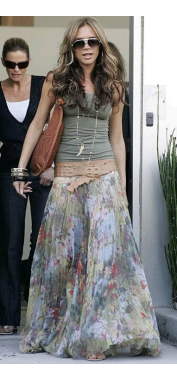
The mid-to-late 2000s quickly moved away from the shiny, synthetic leisure wear toward a mixture of bohemian and edgy street style. Influenced by style icons like Kate Moss and Mary-Kate and Ashley Olsen, boho-chic grew in popularity.
With the rise of boho style, layering became an art form. Tiered prairie skirts with coin-embellished leather belts were paired with slouchy suede boots, oversized sunglasses, and lightweight scarves to create a unique and complicated look.

By 2007 and 2008, denim completed a total reversal. Flare and bootcut silhouettes were replaced almost overnight by dark-wash skinny jeans. These streamlined pants were frequently paired with ballet flats, knee-high riding boots, or platform heels, topped off with long tunic tops and wide, cinched waist belts. This set the stage for the minimalist and indie sleaze trends of the early 2010s.

From low-slung denim and plush velvet sets, the fashion of 1999–2009 proved that style can be unapologetically fun, experimental, and deeply memorable.
0 Comments
There are no comments yet. Be the first one to post one!