
Groovy and Glam: Women’s Fashion of the 1970s by Ava DeLaOssa
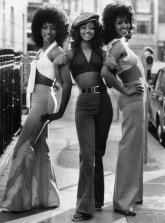

The 1970s was one of the most revolutionary eras for women’s fashion in the U.S. It was no longer just about clothing, but it was an era where political movements, the fight for women’s liberation, and changing music scenes dictated what women wore. Fashion shifted from stiff and structured pieces of the early 1960s to an explosion of individuality, comfort, and self-expression.
At the turn of the decade in 1969, the counterculture movement heavily influenced mainstream style. The late 60s hippie aesthetic evolved into the early 70s bohemian look. Flowing maxi dresses, fringed vests, and earthy tones filled the streets.

Alongside the bohemian look, women were experimenting with daring lengths. While the mini skirt remained popular, hot pants (extremely short shorts) became a huge trend in 1971. These hot pants were often paired with tall leather boots for a confident and modern look.
As the mid 1960s arrived, the Second-Wave Feminist movement reached its peak. Women were entering the workforce in historic numbers. This societal shift demanded a new kind of wardrobe for the working woman. This introduced the pantsuit and Diane von Furstenberg’s iconic wrap dress. For the first time, style was prioritizing practical comfort without sacrificing aesthetics. Trousers were no longer a rebellious statement because they became standard daytime attire.

While the decade highlighted casual denim and pantsuits, it also cleaned into the collegiate and preppy aesthetic. This look was influenced by British pop culture. It contained pleated tartan, plaid skits, button-downs layered under V-necks, sweater vests, and tailored blazers. They were often paired with knee-high socks or tights and chunky loafers or Mary Janes. The style was a balanced and structured look that was still youthful.

The 1970s also became most well known for its silhouette flare. Bell-bottom jeans that were fitted to the thigh and dramatically widened at the knee became worn by practically everyone. Bell-bottoms were often styled with platform shoes in order to add height and make the legs look impossibly long.

By 1976, the rise of disco music took over the nightlife, which fashion directly followed. Natural fibers like cotton and wool were replaced by shiny, stretchy synthetic fabrics like polyester, spandex, and jersey. Opening in 1977, Studio 54 became the undisputed epicenter of nightlife fashion. The club’s notorious door policy meant you couldn't just dress up, but you had to be a walking piece of art to get past the velvet ropes. Fashion inside the club was fluid, sensual, and theatrical. Women traded their structured daytime wools and plaids for fluid fabrics like silk jersey, lamé, and sheer chiffon that draped effortlessly over the body. Iconic figures like Farrah Fawcett , Bianca Jagger, and Cher popularized the "glam-disco" look with metallic wrap tops, plunging necklines, sequins that caught the light, and elegant draped pantsuits. It was an era of ultimate self-expression, where fashion wasn't just about clothes, but about embodying an untouchable, nocturnal fantasy.


The decade of the 70s introduced carefree fashion with its wide and flowy clothing pieces. The silhouettes represent the chaotic, creative, and liberating years of the 1970s that shaped an entire generation.
0 Comments
There are no comments yet. Be the first one to post one!