
The Fast Fashion Era of Publishing By Harmony Gibson
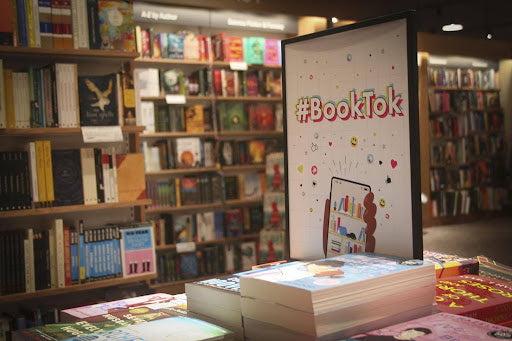

Something strange is happening to books.
On the surface, it seems like a miracle. Reading is popular again. Bookstores are busy. Physical books are everywhere. Old novels are being pulled from the shelves and given new lives, new covers, new readers, and sometimes even entirely new audiences. People are talking about books and reading in hyper mainstream spaces online like the shortform content app TikTok; making reading lists, collecting special editions, and creating conversations and communities centered around recreational reading.
Objectively, this is a great thing.
But somewhere along the way, the publishing industry seems to have adopted the logic of fast fashion.
The same algorithms that tell us what clothes to buy, what makeup to wear, what restaurants to visit, and what home décor to purchase are now telling us what to read. A capitalist, marketing-centered mindset has settled over what began as a wholesome reemergence of our intrinsic love for stories; and books are no longer simply books. They’ve become products in a never-ending marketplace of trends, aesthetics, tropes, editions, and viral recommendations.
The result is a strange contradiction: BookTok may have saved reading from cultural irrelevance while simultaneously changing the way we consume and publish fiction.

The BookTok Renaissance
Let's start with the good.
“BookTok” is the name given to a community of short from content on TikTok that revolves around all things literary and reading based. It emerged at the same time the app started gaining traction—2020. The height of a global pandemic had everyone isolated from the outside world and reaching for community. And for a lot of people, the book side of the app became that. The pandemic, for its many stresses and horrors, gave us all a moment to slow down and get back in touch with the hobbies we didn’t have time for anymore during our busy adult lives; reading being one of them. And as a result, online communities like BookTok have inevitably made reading popular again. Which, in and of itself, couldn’t possibly be a bad thing… right?

For years, there was a genuine anxiety surrounding the future of physical books. When I was growing up in the 2000s, Amazon was still only known as the largest online bookseller, and the arrival of E-reader devices like the Kindle and Barnes & Noble's (which at the time felt like dystopian futuristic devices and now both feel technological relics) made it seem exceedingly possible that physical books might go extinct.
Why carry a shelf of novels when you could carry an entire library in a device the size of a paperback?
The death of print seemed inevitable.

And then the pandemic hit.
And somehow, one of the most aggressively modern forms of digital media (a short form content app) helped revive one of the oldest pastimes.
BookTok has brought millions of people back to reading. It’s created communities around books and encouraged people who might otherwise never consider themselves “readers” to pick up a novel.
It’s even breathed new life into older publications. Books that had been sitting on shelves for years can suddenly become viral sensations, prompting new print runs, new editions, new covers, and entirely new generations of readers.
In some cases, BookTok has essentially resurrected books.
And there is something beautiful about that.
The app has also helped keep bookstores and physical publishing alive at a time when we were told that physical media was dying. The same generation that grew up with smartphones, streaming services, e-readers, and digital everything is buying hardcovers.
There’s something about the inherent duality of man reflected in that. Jung’s collective unconscious theory at hand.
The more digital our culture becomes, the more desirable the physical book seems to have become.
Perhaps this says something about our relationship with stories. We don't simply want to consume them. We want to possess them. We want to hold them, display them, annotate them, collect them, and return to them. We want evidence that the story existed in our lives. That’s how I’ve always felt, at least.
But the impact of the app on the publishing industry isn’t all sunshine and roses.
With hypermodernity there comes a price. A fall in quality, originality, and care, that seems intertwined with anything short form content related.
While BookTok has made books popular again, it’s also made them products of an increasingly fast-moving consumer culture.
What is Fast Fashion?

Fast fashion is all about speed.
A trend appears. Companies reproduce it quickly. Consumers buy it. Another trend appears. The first trend becomes dated. The cycle begins again.
And not only are there too many clothes and not enough room in the landfills for all the slop to be dumped; but the entire system constantly pushes us to want something new.
More and more, this trend has trickled down into the book industry, viewing novels as products rather than stories.
In general, social media has created a kind of scarcity mindset around cultural products. Something becomes popular, and suddenly everyone wants it.
Think of the Labubu creature that made its rounds a few months ago, became impossibly priced and impossible to find, only for them to drop off the face of the earth a few months later.

The same goes for books. A particular edition of a book goes viral and disappears from shelves. A special cover becomes impossible to find. Resellers begin charging absurd prices for copies that were sitting in bookstores only months earlier.
What’s ironic is that the original covers are the ones people are after, the covers that went overlooked for years and got printed over with the sleek modern design in hopes of selling more copies as it trends online a decade later. Sarah J. Maas’ “Throne of Glass” series is a particular example which comes to mind.


And this is the same phenomenon that happens with fashion.
Thrifting, for example, used to be one of the most accessible ways for lower-income people to find quality clothing. But the rise of thrift-flipping and the aestheticization of secondhand shopping has transformed thrift stores into hunting grounds for trends. Suddenly, something that was once inexpensive because it was used is expensive because it is desirable.
Scarcity becomes part of the appeal.
What Happens When Stories Become Products?
The goal becomes not necessarily to create the best book, but to create the book that can be sold right now. What’s trending? What do audiences want? Instead of asking what an author wants or needs to write.
The story isn’t the point anymore. The point of it disappears. Escapism takes precedence over thematic content. And writers whose stories are authentic and niche, maybe don’t fit within the marketing system that’s prioritized in the publishing industry in the wake of BookTok’s fast fashion mentality are overlooked.
What’s worse, authors are encouraged to build platforms. Follower count and social media presence and content creation become ways to instantly gain a publishing deal, without even having their work properly edited or well written at all.
A large example that comes to mind is the controversy surrounding a certain author who promoted her work before it was finished, marketing it as a fully realized and ready to read manuscript with extensive lore and polished prose.
The author’s book [which I won’t name here, because they’ve been named and persecuted enough] was so well marketed, using trending titles as comparisons and popular tropes, that their story began to trend and gain a cult following. The author gained such an audience and follower count on socials that a large publishing house picked up the work and sold multiple copies before it was even finished.
The result of its publication was a resounding wave of criticism and negative reception. The work was amateur, incomprehensible and horribly written. The work was the perfect example of the horrific impact fast fashion mentality and marketability over merit has had on the modern age of fiction.

And Then There Is Plagiarism
The debates surrounding similarities between books such as Red Queen and Powerless are examples of what happens when imitation and inspiration become indistinguishable to authors as they rush to fulfill trendy story ideas rather than strive to create their own. Writers have always borrowed from one another; Genres develop through repetition, after all.
Even Picasso said: “Good artists borrow, great artists steal.”
But there’s a difference, and any artist understands the nuance Picasso means in his famous words. Borrowing or copying is but a mere imitation. To steal, in the sense that he means, is to transform the inspiration into your own creative body. And when your entire goal is to hurriedly fill the trough with its own recycled waste, it becomes impossible.

When publishing becomes dominated by trends, the incentive to innovate dissipates.
Why create something from scratch when you can 3D print the same model?
And after a while, how disappointing is it when you realize that everyone is selling the same thing?
The Death of Fiction?
So, where does this leave us?
Is this the death of fiction?
I hope not.
There is a beacon, beneath it all.
After all, people are reading again. After years of hearing grown adults say proudly, with their chests, that they hadn’t read a book since middle school, that kind of small talk seems to be disappearing.
Fiction is very much alive.
But perhaps something else is dying.
The idea that a novel can be slow, strange, difficult, indulgent, ugly, boring, beautiful, experimental, or completely impossible to categorize.
There’s nothing wrong with loving a spicy romance, reading fantasy because you want escapism, or discovering your favorite book because someone on TikTok told you to read it. What we need to be wary of is mistaking marketability for quality.
Books were never meant to be consumed like trends. They’re not supposed to be quickly consumed and easily confused with any other work that was published in the same decade. They’re supposed to stick with you, to persevere because of the content and the care and intimacy that they hold. Somehow, BookTok has made people treat books like trends. Which is sad, because it’s the same platform that made reading mainstream, and revived an industry.
But maybe the cycle won’t last forever. Reading is an intimate experience. It asks us to sit with another person’s imagination or experience, to inhabit a perspective that isn’t our own, to view the world through someone else’s eyes for a little while. We read for the excitement and the adventure, certainly, but also to understand something; to be challenged, changed, or simply reminded that there are ways of seeing the world beyond our own. And that’s the beautiful thing about humans; we keep reaching for it. After all, isn’t that why a community like BookTok even came about?

-HG
0 Comments
There are no comments yet. Be the first one to post one!