
Love Island USA: The Summer's Hottest Social Experiment Are These ‘Sexy Singles’ in Fiji or a Neon Test Tube? By Kayla Doria Ward
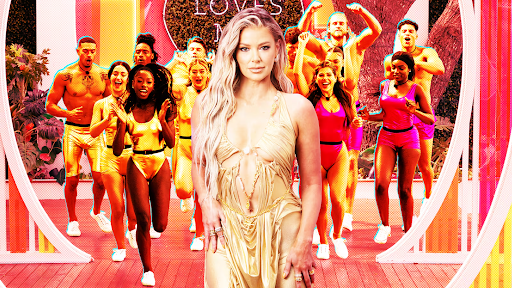

Welcome to the villa, islander! Before you head in, would you mind consenting to 24/7 surveillance, no contact with the outside world, no rights over your image portrayed on the show, and editing narratives that push the public to hate and shame you? Yes? Perfect! Go ahead and enjoy six weeks on Love Island! That is, if you aren’t voted off…
Love Island USA kicks off every summer and airs for around six weeks on Peacock. Single “islanders” arrive at a secluded island called “The Villa” and immediately start “exploring” and “coupling up”. Here they will sleep, eat, play games, gossip, and wear a mic pack so all conversations are recorded. As the weeks go on, couples will face new islanders and challenges that test their existing connections. Every so often, a recoupling will be decided by America's vote or the islanders. When this happens, two islanders will be shipped back to the real world. In the end, only a few couples remain for the chance of $100,000.
Love Island has managed to combine every intriguing and exploitative reality TV tactic. Constant surveillance (Big Brother), isolation from the outside world (Survivor), and public participation (American Idol, America's Got Talent, etc.).
But the short summer for islanders has a dark side, as does any reality TV show, especially in the age of Social Media. While some gain large followings and branch out to become influencers, many aren’t equipped to deal with what follows the island. “The constant pressure to look perfect, find love, and stay in the public’s favor can be overwhelming. Contestants are often thrust into the spotlight with little preparation for the mental toll of fame, intense scrutiny, and social media backlash. With millions of eyes on them, these young adults are exposed to criticism and praise in equal measure, leaving them vulnerable to anxiety, depression, and self-doubt.”1
I’ll be covering a small portion of the hidden downsides that most viewers overlook while tuning in each week, from psychological effects, social media’s role, and what happens after The Villa. Before I begin, just a small disclaimer to cover my tail: The claims and commentary featured in this piece are based on public reports, online sources, and viewer discussions. All unverified assertions are strictly alleged.
The Chemistry: Psychological and Physical
If you’ve tuned in to any episodes this season, you’ve probably seen a little too much physical chemistry rather than emotional chemistry. But if you’ve been following from the start of the season, you’ve definitely seen the psychological breakdowns and confusion in couples. But can you blame some of the islanders? What tools do they really have at their disposal in The Villa?
ITV America confirmed to Vogue in a recent article that an entire team supports islanders before, during, and after their time on the show. While still in the application process, potential contestants receive multiple assessments from a psychologist to survey their current mental well-being. “In addition to producers, managers, and HR, the show provides a duty-of-care representative, two on-site licensed psychologists, and a full-time welfare manager who oversees participants’ daily care and addresses any concerns or questions.”2 Production also claims “each participant is briefed on the potential downsides of being cast on the show, such as possible negative reactions on social media and in the press, as well as limited or no access to electronics.”2
Former islander, Caro Vie Lacad, expressed her frustration with the reality of these precautions. Lacad shared on her YouTube channel that while there were psychologists on set at all times, she felt the counseling was “superficial” and “wasn’t anything digging deep, [It] felt like I was just talking to another producer.”2
A recent and popular contestant, Leah Kateb, also shared her own struggles on the Call Her Daddy podcast. Kateb said she considered leaving multiple times during her season because of “fear of how the public perceived her behavior” and “she once saw the on-set psychologist three times in a day.”2
Producers saw the complaints and media outrage from former islanders. They addressed the backlash in a statement, echoed by host Adriana Madix, who said, “The keyword in Love Island is…love. We love our fans. We love our Islanders. We don’t love cyberbullying, harassment, or hate.”2 As many have probably seen this season, online discussions have not heeded this message. So the question remains, at what point will real change happen in The Villa or online?

While it is easier to agree with hate online and hide behind a screen to bash couples, Janette Porter and Kay Standing conducted a focus group of younger viewers to gauge their reactions to the show's emotions, actions, and relationships. The group deemed that many behaviors were not “healthy”, but recognized “they may not have the skills and information to recognize the signs of unhealthy relationships, and speak out against abuse.”3 Porter and Standing's research concluded that the young people they surveyed in schools often “lacked an awareness of what romantic and sexual relationships entailed, and what the early warning signs of abuse are.”3 With such limited reliable sources, most turned to social media and the internet for information.
These next three accounts are word-for-word quotes from the focus group participants. FG refers to focus group, and F refers to female.
“When someone is trying to manipulate the other person or do gaslighting everyone recognizes it and sees it so everyone talks about it and brings awareness to unhealthy relationships then the media all joins in so the emotional trauma is talked about (FG, age 17 F).”3
“It's good it can teach young people about relationships what's good what's bad. It gets us taking about relationships in school and it's lets us see bad personalities (FG, year 9, age 13 F).”3
“Love island would be good in schools teaching the kids about relationships the conversations are a starting point, teachers could use the couples as examples when talking about things like what is a toxic relationship and what is gaslighting (FG, F 21)”3
Social Media’s Role
Social Media without any “villain edits” or embarrassing childhood pictures is toxic enough. The majority of users go their whole life without experiencing the pain of cyberbullying from the masses. Unfortunately, this reality is inevitable for reality stars. But when does the line become crossed and blurred by some online haters?
Love Island USA host, Adriana Madix, has been very vocal about defending islanders from internet trolls and bullies. In a weekly recap episode from season seven, she issued her very own message to these toxic fans. “I do want to say something to some of those people that are online,” she said. “Don’t be contacting people’s families. Don’t be doxxing people. Don’t be going on Islander’s pages and saying rude things. You still have time to delete all of that, because the Islanders don’t have their phones, so we’re giving you a chance.”4
Viewers are quick to put islanders on blast and under a microscope once the final 12 are picked at the beginning of the season. This heavy research into their backgrounds can range from physical appearance to political background. The majority of “digging” online only resurfaces islanders' high school sports photos or childhood photos. But what happens when the findings aren’t so innocent?
Before the premiere of season eight, viewers were quick to find a video of one soon-to-be islander saying racial slurs. “Two videos soon began circulating on social media showing a contestant, Vasana Montgomery, appearing to say the N-word on camera — once while singing a song and another time while yelling at an arcade game.”5 She was quickly cut from The Villa after online outrage began. A newly announced bombshell was found using the same racial slurs in a screenshot from a comment section and on a social media app. As of June 24th, 2026, producers have yet to speak out on whether the bombshell will be cut from the show.
Last season, an islander was pulled mid-week for a similar case of racial slurs resurfacing. Except she claims toxic fans went as far as to make false “swatting” calls. “What’s been extremely, extremely difficult is the way people are approaching my family and my loved ones,” she said. “They have had ICE called on them. My family does not feel safe in their own home. I have received death threats.”6 While racism, of any form, should not be tolerated, this extreme puts islanders' loved ones in harm's way.
Former islander, Danila Ortiz Rivera, shared the dark side of extreme bullying and harassment online. After a special reunion episode, she shared on TikTok a message on suicide awareness.
“I’ve personally lost family members. People who mean a lot to me to that. And the way I wish I could have done something about it kills me every day that I couldn’t do anything about it kills me every day,” she said. “At the end of the day, these people aren’t characters. They’re real people with real feelings … One bully, one online hater, has done this to many people.”

Video Link: https://www.tiktok.com/@daniortiiiii/video/7403250909553134879
The video was filmed after the reunion, during which online hate was a prominent topic. “Hearing people talk about that today, and just hearing expressed to me multiple, multiple people are going through this,” Rivera said. “And it breaks my heart and please be more kind to these people. Everyone is going through so much. Everyone’s learning from their mistakes every single day.”4
One rare case of “exposing” involved an NSFW video of an islander, Kendall Washington, being shared during the show's filming. It was later revealed that the video was sent through a dating app. While Washington didn’t have his phone or social media to address the situation, it was a source of conflict with the islander he coupled up with, Nicole Jacky, at the show's finale.
Washington shared after The Villa, via Instagram, the video was "shared to someone in confidence and trust”7 going on to say, “I just want to address the content that came out from my past. That was something I shared to someone in confidence and trust. It’s unfortunate that it’s no longer private but it is what it is."7
After The Villa
While many islanders remember what conversations they had in the Villa, tricky editing can twist words around to create a new narrative. Fans of the season can also feel like they’ve earned insight into a couple's relationship updates once the season has concluded.
Popular trio of season six, Serena Page, Leah Kateb, and JaNa Craig, were quick to become viewers' favorite with the title “Powerpuff Girls”. Craig revealed after the season concluded that the trio and fellow cast members, including Kordell Beckham, Miguel Harichi, Liv Walker, Kaylor Martin, and Kendall Washington, were her main support system.

However, after her split with fellow islander, Kenny Rodriguez, intrusive fans started brewing theories and horrible conclusions on what could be the cause. She released a statement confirming none of the theories were true and “none” of the theories on the breakup “have matched up to how terrible, disgusting, and disappointing it truly is."8 But if that wasn’t enough, fans started criticizing her for not seeing the red flag while in The Villa. She voiced out yet again, “I hate that people online are telling me that. I just feel like, when someone has a hidden agenda, they’re going to come off as genuine as possible to reach their goal. The red flags that people saw, I didn’t see,” Craig says. "People are like, ‘You missed so many things.’ I'm like, ‘But I didn't.’ Because no one's perfect. No couple's perfect. There are situations where we forgave each other as you would do in a relationship. It gets frustrating, but it's OK. Life goes on.”8
Popular “villain edit” season seven islander, Huda Mustafa, had her co-parent come to social media to try to tame hateful comments and threats. “Her going on that show to find love, or whatever you think it was she’s doing, remember she’s still human, she has a daughter, and a life.”6 He asked fans to “think about how their words will impact Mustafa’s mental health, upon her return home from the reality series.”6 Another example of threats includes former islander, Chelley Bissainthe, who turned off Instagram comments after an influx of death threats comments towards her and fellow islanders.
Closing Thoughts
Reality TV should be approached with a healthier view when it comes to harassment online, but producers and crew should also be held accountable for the environment they’ve created. “Reality shows have been found to exacerbate body anxiety, increase physical aggression, and mess with our expectations for romantic relationships,” writes Judy Berman for TIME.6 So if you’re tuning into Love Island USA this season, just remember you're watching real people in real time. Keep those post-episode pyramids to you and your watch parties' eyes ONLY!
Sources:
-
https://www.vogue.com/article/love-island-usa-psychologist-2026
-
https://www.nbcnews.com/pop-culture/tv/love-island-usa-boots-vasana-montgomery-n-word-rcna347776
-
https://thedirect.com/article/kendall-love-island-video-leak-lie-what-did-he-do
-
https://people.com/love-island-usa-jana-craig-speaks-out-im-strong-than-i-thought-exclusive-11795812
"Love Island" Stars are (Legally) Cooked (LegalEagle) https://www.youtube.com/watch?v=GPNPs_a-WNM
0 Comments
There are no comments yet. Be the first one to post one!