
Eccentric and Eclectic Fashion of the 1980s by Ava DeLaOssa
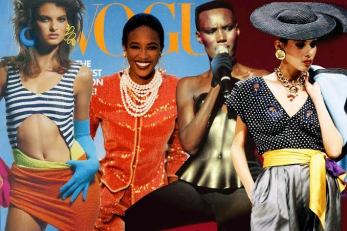

Between the years 1979 and 1989, women’s fashion underwent one of the most radical transformations in modern history. Style ceased to merely reflect culture, but it became a tool for women in male dominated spaces and breaking traditional aesthetic rules. Rather than a single uniform look, the decade was defined by distinct subcultures, shifting societal roles, and powerful cultural influences.
As the late 1970s turned into the early 1980s, the bohemian, relaxed cuts vanished. Women were entering corporate management in unprecedented numbers, introducing power dressing. Designers like Giorgio Armani, Donna, Karan, and Yves Saint Laurent borrowed elements from menswear to create a corporate silhouette for women. Shoulder pads, which were made of dense foam pads, were inserted into women’s jackets to widen the natural shoulder line. These double-breasted blazers were paired with tapered pencil skirts or high-waisted pleated trousers.

By the mid-1980s, television and music videos took complete control of fashion trends. The launch of MTV in 1981 transformed pop stars into global styles icons, whale movie screens dictated everyday casual wear.
The popularity of Jane Fonda’s workout tapes and films like Flashdance introduced athletic gear into mainstream street fashion. High-cut Spandex leotards were layered over tights, while slouched knit leg warmers, sweatbands, and raw-edge, off-the-shoulder fleece sweatshirts became everyday staples for teenagers and young women. Simultaneously, New Wave and punk movements introduced acid-wash jeans, ripped denim, oversized motorcycle jackets, and heavy metal hardware into mainstream wardrobes.

No single figure reshaped women’s fashion in the 1980s more profoundly than Madonna. Bursting onto the music scene with her 1983 debut album and iconic 1984 Like a Virgin performance, she didn’t just follow trends, but she created a global fashion phenomenon.
Madonna subverted traditional ideas of femininity by turning innerwear into outerwear. She famously combined lace bustiers and corsets with distressed denim, fingerless leather gloves, mesh tops, and stacks of black rubber arm bangles. Her signature messy, bleached-blonde hair, held back with oversized dark fabric bows, were paired with heavy dark brows, beauty marks, and layers of long crucifix chains.
Her influence extended far beyond music fans. Millions of teenage girls and young women were labeled as Madonna wannabes by adopting her unapologetic, mix-match approach to dressing. She proved that fashion could be rebellious, playful, empowering, and accessible all at once, laying the groundwork for how pop stars use style as a tool for self-reinvention today.

In the final years of the decade, the economic boom of the late 80s pushed fashion toward theatrical, unapologetic luxury. Nighttime fashion called for drama, volume, and bold shine. Formal dresses featured massive puff sleeves, peplum waists, metallic lamé fabrics, and taffeta bubble skirts designed to hold maximum shape. Christian Lacroix introduced the iconic “pouf” skirt in 1987, while Azzedine Alaïa pioneered body-con dresses that celebrated form-fitting stretch materials.

The clothing of the 80s was mirrored by dramatic, high-volume beauty routines. Teased hair was sprayed into gravity-defying shapes with cans of hairspray, paired with vibrant colored eyeshadows, bright pink blush on the cheekbones, and vivid crimson lipstick.
By the time 1989 came to a close, women's fashion had moved entirely away from rigid uniform expectations toward individual self-expression. Whether through a sharp corporate power suit, a Madonna-inspired punk ensemble, or a neon athletic outfit, the decade gave women the license to dress loudly, occupy space, and command attention entirely on their own terms.
0 Comments
There are no comments yet. Be the first one to post one!