
Fashion of the Silent Film Era By Kayla Doria Ward
The history, techniques, and drama of early 1900s Hollywood

The Premiere of Silent Film Fashion
Silent films are the blueprint for modern performers. Most silent films of the early 1900s relied heavily on big movements, loud expressions, camera angles, and intense lighting. Close-up, emotional shots are still used in almost every film today. It brings the viewer into the character's world. But what is a character without an outfit?
In everyday life, you’ll walk by a handful or hundreds of people depending on where you live. The only clues you're given to who that stranger is are based on their outfits, makeup, hair, and maybe accessories. Much like a silent film, you are just a viewer. They pass by you without dialogue. Perhaps some are showing more emotion or physical expressions than others. But your only impression comes from their fashion or style.
The same standards judge silent films of the early 1900s. In fact, the five films I am focusing on in this article were not released in color. This makes the job of a costume designer or makeup artist more complex than a typical Technicolor set.
To break down how this era of film crews innovated an entire industry, I’ll examine the fashion, cosmetics, and hairstyles of the early 1900s and introduce five of the most, in my opinion, influential films that broke barriers in the 1920s.
The Fashion
Films heavily influenced fashion in the early 1900s. Instead of doomscrolling Pinterest to find your next summer hair color, many would tell a barber to give them a style similar to an actor or actress from a specific film. Before I can dissect film fashion and techniques, I have to pay my respects to the iconic staples of the early decades that influenced and evolved these later trends.
1900-1910
Wealth classes determined fashion. The wealthy were bringing the body and drama. The “it girl” was not a person, yet a concept. This concept was the OG it girl, and she went by Gibson. The Gibson Girl was taking charge and not worried about chasing a man's affection. In more technical terms, she was “holding authority over male suitors”1 and an “independent woman.”1
The ideal physical attributes were a round and large behind, a snatched waist, and full hips. Most women didn’t, and still don’t, unless you're the icon, Morticia Addams. So, corsets were used to push busts forward and hips back while helping relieve unnecessary pressure on the abdomen. This was coupled with rich fabrics such as silk satin and chiffon, light colors with embellished decoration on dresses, and bell-shaped skirts. Dresses were also modest with long sleeves and fabric covering from the neck to the floor.

Working-class women took a more practical approach to fashion. This rise came with women working jobs outside of traditional housework. The preferred attire was labeled “Tailor-made”. These suits made the bodice and blouse interchangeable while keeping the skirt. Think of an Alo gym mom who owns the same tennis shorts in 12 colors. This also introduced dressing for particular occasions, becoming the new norm with an economic bonus.

However, near the end of the decade, the “rigid S-bend shape”1 lost popularity, and women opted for a more natural shape: looser tops, narrower sleeves, higher waists, and tubular silhouettes.
Men's fashion moved much more slowly and focused heavily on subtle accessories with a consistent base. Frock coats were a common base, no matter what wealth class you were in. These overcoats were a “knee-length, tailored skirt cut continuously around the base.”1 Features included a high and tight waist, buttoned-down front to waist, and split, tail-like lower back half. Basically, whatever you imagine when reading the words top hat, monocle, horse and carriage, sideburns, British gentleman.

During the day, men were spotted in three-piece suits for “formal daytime occasions”.1 While colors and patterns varied, they didn’t get too daring. Send one of these hooligans to A Bathing Ape store, and they would most likely faint on the spot.
1910- 1920
This decade was divided into pre-war and war. A staple of pre-war fashion was the introduction of Orientalism. The Ballets Russes performed “Schéhérazade”1 in Paris, which brought this style to the attention of millions. But French fashion designer Paul Poiret, helped popularize it. The style consisted of “draped fabrics, vibrant colors, and column-like silhouette.”1 Welcome back, high-fashion circus performer drag.

Once war fashion hit, it was in full swing. Simple, utilitarian clothing was booming, featuring Tunics over skirts as a staple. Women working in factories commonly wore uniforms, overalls, and trousers daily. Even some military-uniform elements snuck their way into fashion, with jackets worn over long skirts and barrel-like silhouettes.

After the war ended, the popular flapper look took root, with cylinder-like silhouettes becoming popular.
For menswear, lounge suits became a popular casual alternative to formal suits. Lounge suits typically included a sack coat, waistcoat/vest, trousers, and high-neck collars. The men even dared to show some ankle with turned-up cuffs. Again, welcome back 2016 cuffed jeans with checkered vans.

By wartime, many men knew nothing but a military uniform. But interestingly enough, brands started seeing trench coats on the rise and dipped their toes into the market. Notable brands such as Burberry and Aquascutum. This high-end market for trench coats is still evident today and is used as a symbol of power or wealth in Hollywood. Miss Lily Rose Depp knew what she was doing, having her trench coat buttoned to the TOP.
1920s Film Fashion and Cosmetics
The 1920s film fashion era is largely defined by the iconic Roaring Twenties look. The drama of a beaded flapper dress, cloche hats, dramatic harsh makeup, drop-waist silhouettes, bobs, and bold lips. Hold my pearls, Mr. Gatsby. By 1925, costume designers were starting to receive proper credit for their contributions to film as well. But the work of makeup and hair artists was just as important. We’ve all had a day we didn’t have time to do all three of these things and felt like a mess.
Hair
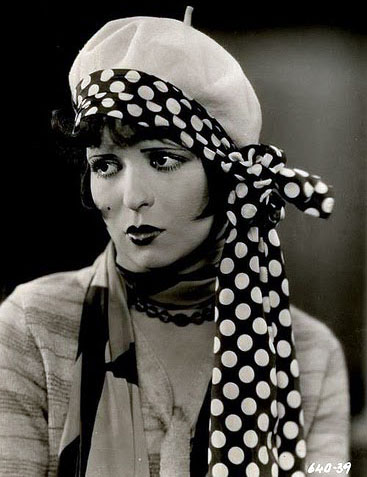
Women's hair was a staple in silent film. Iconic styles still seen circulating in today's fashion space came from this time period. The first wave of trending styles was long, curly hair. Various styles played with length, such as loose piles atop the head, curls pinned down, half-up, half-down, adding headscarves, and the simple all-down with a sweep. The next wave came in 1924, the bob: an icon and legend. Bobs had a variety of cuts, such as full fringe or bangs with curly and straight bobs, blunt bangs covering the eyebrows, heart-shaped cuts with a shorter middle compared to the sides, and the classy curled bangs resting at the cheekbones. I see you miss Betty Boop.
The most iconic looks were from Louise Brooks, Clara Bow, and Josephine Baker. Brooks sported the black and blunt bob. Bow introduced THE look with a “curly bob with perfectly rouged cupid's bow lips”2 that became a flapper staple. Baker popularized the sleek “Eton” style on a global level2.

Makeup
Early films required an almost clown-like makeup appearance to show clearly on a specific film. Orthochromatic film presented a colorful challenge. Since it wasn’t sensitive to “yellow-red wavelengths”3 the color on that end of the spectrum would appear close to black on screen. Similarly, blue and purple tones appeared pale. These shades left performers looking like they had smeared dirt on themselves before rolling. Blue eyes would also turn blank and horror-like.

To correct this shading problem, blue-toned greaspaint was used as foundation and contour, while the lips were painted in a yellow-toned shade. There was a big issue with using greasepaint directly on the skin. It was more toxic than your gaslighting ex. To solve this issue, Max Factor, a wig and cosmetics shop owner in Los Angeles, developed Flexible Greasepaint in 1914. He quickly became the “most sought-after makeup artist in Hollywood and the leading figure in cosmetic development for the industry.”3 His most memorable looks in the industry are sharply peaked cupid's bows and “smeared” lips (lining that extends beyond the natural lip line).
Emerging industry standards for a camera-ready face included deep-set eyes created with shadow from the lash line to the socket, long, bold, straight drawn-on eyebrows, and shiny eyelids to reflect the lighting.
THE Five Silent Films
This 1924 romantic melodrama is the story of Beau Brummel. Director Harry Beaumont drew inspiration heavily from the 1890 version by Clyde Fitch. But Beaumont's version is notably recognized as much more lavish. Major spoiler warning! If you haven't found the time between 1924 and now to watch this film, then I’d suggest turning off your device and doing so, procrastinator. Or you can just skip the next two paragraphs.

The story is set in 1795, and the condensed summary4 is as follows: a bride is being married off to a lord while her true love lies in Captain Beau Brummell's heart. Brummel decides to stick it to this cruel class system by using his charm and wit against it. He comes into the likeness of the Prince of Wales, who follows Brummell’s fashion and tastes in women. He is whisked into a swoon of popularity because of his style, but soon falls out of favor with the Prince. His troubles then start to build until his final days in prison.
What makes this story so unique is that it is based on the real Beau Brummel. Following a similar upbringing to popularity, he was said to popularize “the cravat and beautifully tailored, well-fitting men's fashion, thus creating the progenitor of the modern suit.”4 The original tale rumors it took him five hours to dress. But his high-fashion lifestyle turned into debt and a decline in social rank when he made a “scathing”4 comment about the Prince’s weight. He eventually passed away penniless on account of syphilis.

What made this film stand out visually was its larger-than-life costume design. It’s attention to detail, patterns, placement, and makeup that make for an immersive film. Not only were the women in dramatic makeup, but the men were just as fierce. Actor John Barrymore's profile was so striking that some shots can resemble poses on a coin.
The real standout of the 1927 version of Chicago is Phyllis Haver, who plays Roxie Hart. Haver’s performance showcases Roxie as a manipulative, narcissistic nightmare. Her expressions and movements tie into the incredible artistry of the makeup and costume heads.

The condensed summary5 is as follows: Roxie Hart is a bored housewife stuck in a bored marriage who has an affair rooted in gold-digging. But when her secret lover attempts to end the affair, Roxie shoots and kills him. She confesses to her husband that it was self-defense, and he is willing to take the blame. But once the police uncover that Roxie is the true killer, she is taken to jail and faces death. However, lucky Roxie ends up meeting a mob lawyer x publicity agent in jail. Her case then turns theatrical when the focus is set on her innocent beauty to win public sympathy. She is put in a spotlight she just can’t get enough of! She wants this 5 seconds of fame to turn into 5 years baby!
Like said at the start, Haver does an incredible job using costume movement and close-up shots to diva down this film. Think the little brat from Charlie and the Chocolate Factory meets Betty Boop. But mama, the fashion! A little night slip with slutty lace at the edges, covered in an expensive-looking fur-lined robe. PLEASE! The curls, deep-set eye makeup, and bold lip really seal the deal. Once you’ve finished this film, you’ll feel like the “It’s spectacular, get me 14 more” meme.

Ramona is an extra special film to me. The late Dolores del Río, the first female Latin American to break barriers in Hollywood, plays Ramona. This role was pivotal because most “exotics”6 were played by “Anglo”6 actors and actresses at the time. Del Río won over audiences with image management and the soul she’d put into each character. Her emotions and subtle expressions truly brought her roles to life.

You know the drill by this point: Ramona grows up in a wealthy, Mexican-American family. Her stepmother opposes her true wish to marry Alessandro, a Native American sheep shearer, pressuring her into marrying her stepbrother, Felipe. Her reasoning? (She’s a wicked stepmother.) The marriage would disgrace the Moreno name.
Ramona eventually learns she is half Indian, revealing the source of her stepmother's initial disapproval. Knowing this, she flees her privileged life to marry Alessandro. They try to make a life together but face many hardships and, eventually, a tragedy that drives Ramona to the brink of madness.
SPOILER! The hardships include prejudice and violence, the death of their daughter due to a white doctor's refusal to treat her, and the massacre of their village by white settlers. The big tragedy that causes Ramona to become hopeless, and eventually to lose her mind, is when Alessandro is murdered due to a false accusation of horse theft.
Del Río portrays Ramona as a beautiful, carefree happiness. The camera and lighting in the film are also unforgettable. You feel as if you're looking into a memory. Of course, the fashion was monumental and was a great representation of culture, from hand-sewn designs on traditional patterned dresses to a mix of trending curls with traditional braids. Ramona, they could never make me hate you.

The attention to detail in the main characters' outfits is breathtaking, but take a minute to pause and look at “extras” in the background. You no longer feel like you're watching; you feel embraced by the culture. A notable detail is the contrast between Ramona's dark eye makeup and jet-black hair and her surroundings. She stands out in so many ways.
Now, before going on, add up how many times I said Ramona and take a shot! Then rent or buy the film because you can’t drive anywhere now.


Even though this film is not shot in color, it tells an unforgettable story of color, prejudice, mental struggles, mental and physical abuse, and the product of your environment—a huge trigger warning while reading the condensed summary.

The condensed summary7: Alvin Hillyard, an aspiring black composer, marries Louise Howard, an abused daughter of a lower-class, to get her out of the hands of her stepfather and predatory nightclub owner. However, once he “saves” Louise, he refuses to let her meet his mother because of his mother's prejudices against the lower class. Alvin is too ashamed to face her disapproval.
SPOILER! Alvin leaves town, which gives the nightclub owner the perfect excuse to try to lure Louise back in. When Alvin finds out, he accidentally shoots Louise in the neck when trying to confront the predatory owner. Because of the neglect Louise endures at the hands of Alvin, she testifies against him, which lands him in jail. Eventually escaping, he assumes a new identity as a music instructor and falls for Alice, a wealthy woman.
Hold onto your device because it gets TWISTED. Alice’s father is the backer of the nightclub Louise was shot at, which leads their paths to cross again. After rejection from Alvin after long, confusing years of lingering love, she commits suicide. She leaves a note clearing Alvin's name, and he is forced to come clean about his hidden life.
It feels wrong to suggest that the film's fashion is more important than its message. So I’ll simply say, as a blanket statement, that all my observations merely add to the film's true meanings and make for an overall stronger, more memorable film.
The representation of an all-black cast shook the industry, from costume design to hair. Bold lips and defined eyebrows were still shown, but some of the most impactful close-ups pictured an almost bare-faced actress/actor. It not only impacted the industry but also the audiences. Representation matters people! Seeing popular styles mixed with such a gritty subject matter makes for true art.

A popular German Weimar-era silent film that is known for its dreamy visuals and comedic chemistry. It gives a seducing, luxurious game of cops and robbers. I cannot be more heavy on the VISUALS. The only form of payment in this story is face card, I fear.

The condensed summary8: Albert Holk is a constable who lives with his stern parents, who adore him so. He is the poster child for a gated community and a private school. Else Kramer lives a life of petty crimes. She is caught by Albert robbing a jeweler. The shop owner doesn’t want to press charges, but Albert must follow his training. When attempting to take her in, she doesn’t have identification on her, so they must go back to her apartment to retrieve it. All the way to and in her apartment, Else attempts weeping, pleading, alcohol, and sickness to get out of the mess. None of her attempts succeed, so she throws herself on him and seduces him into a trance. After alluding to off-screen acts, Albert leaves and doesn’t bring her in after all.
SPOILER! Upon arriving home, he is haunted by Else's movements and seduction and, overall, disappointed in himself. They meet again, and he declares his infatuation and asks for her hand in marriage (Major Obsession vibes, get Curry Barker on the phone for a prequel). They’ve both fallen hard. But she forgets to mention her relationship with the criminal, Konsul Langen. Of course, he shows up at her apartment, and the boys are brawling. Albert ends up killing Konsul in a fight. Else is swept up by the events and decides to go into the station to turn herself in, saving Holk from a life of crime.

Absolutely ridiculous premise, but the aesthetics make up for all of it. Large, luxurious fur coats, jewels, big, bold lips, and curls so tight they make a laced corset look loose. The makeup strays from the traditional deep, dark shading, replacing it with bright, glittering shadows and dark lashes. The iconic Cupid's lip is on full display for close-ups as well. The fashion might also be my favorite of the time period. Perhaps it’s the acting combined with the character's luxury, but Else is just so stunning. The devil actually doesn’t wear Prada; she wears a thick fur coat with embedded jewels, honey.


Final Thoughts
The fashion, the drama, oh my. Not only does the silent film era showcase its style staples, but it also brings a greater sense of inclusivity to the industry.
Fashion today is still pulling from 1900s styles such as snatched-waist corsets or slicked-back, curled short hair. We see tons of creatives on social platforms pulling makeup looks to incorporate into their own craft. Trends are a never-ending cycle of past fads, but I hope this era brings back classy, iconic looks. Or better yet, let her rest so Shein doesn’t get their hands on her.
I’m no good at goodbyes, so I’ll leave you with a simple question. How do you see these stylistic or cultural impacts in your own life? Which trends do you want to bring back asap.
References
1 https://fashionhistory.fitnyc.edu/1900-1909/
2 https://vintagedancer.com/1920s/1920s-long-hair-to-bobbed-hair/
3 https://www.blue17.co.uk/vintage-blog/fashion-and-film-the-1920s-and-1930s/#
4 https://www.tcm.com/articles/184985/beau-brummel-1924
5 https://silentfilm.org/chicago/
6 https://silentfilm.org/ramona/
7 https://www.fingerlakesfilmtrail.org/about-the-scar-of-shame
8 https://moviessilently.com/2015/03/22/asphalt-1929-a-silent-film-review/
0 Comments
There are no comments yet. Be the first one to post one!