
Gorpcore: Why Everyone Wants to Look Like They’re Going Hiking By Anamaria Gomez-Arrigo
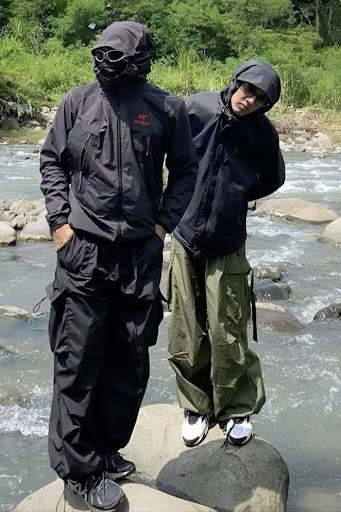

There is a very specific outfit that makes someone look like they are either about to summit a mountain or walk ten minutes to get an iced coffee. A fleece zipped to the chin. Salomons that have never seen a trail but could probably survive one. Cargo pants with more pockets than actual belongings. A beanie, a utility bag, maybe an Arc’teryx shell thrown on top even though they’re standing in the middle of a city block with no mountain in sight.
The funny thing about gorpcore is that it treats everyday life like a spontaneous adventure.
The word itself comes from “gorp,” a nickname for trail mix, often understood as “good old raisins and peanuts” or “granola, oats, raisins, and peanuts.” But the style has outgrown the snack. Gorpcore is outdoor gear pulled out of the woods and dropped into the city. It is clothing designed for rain, mud, wind, rocks, and long walks, now being worn to class, coffee shops, and everyday errands.
At its simplest, the look is easy to spot: fleece jackets, waterproof shells, cargo pants, hiking sneakers, technical backpacks, crossbody utility bags, beanies, wraparound sunglasses, and colors that look stolen from a national park sign. Think forest green, rust orange, slate gray, muddy brown, electric blue, safety yellow. It is practical, comfortable and outdoorsy.

Gorpcore did not appear out of nowhere. Outdoor clothing has been crossing into streetwear for decades, from The North Face puffers to Nike ACG to hiking boots and technical jackets showing up far away from actual campsites. But the last few years gave the look a new kind of cultural power. People started craving clothes that could do more than just look good. They wanted warmth, comfort, pockets, durability, movement.
And maybe that is why gorpcore feels so right now. It is fashion for people who are tired of feeling delicate.
The silhouette is relaxed, layered, and built for movement. Loose pants make the outfit feel easy, chunky shoes add a sense of utility, and technical jackets bring in that ready-for-anything energy. Even if the most intense part of the day is walking across campus or getting caught in light rain, gorpcore makes the ordinary feel a little more adventurous.
That is also what makes it kind of romantic. The person wearing the technical shell may not be going anywhere wild, but the outfit suggests they could. It carries the fantasy of escape. The fantasy of being someone who wakes up early, drinks water, owns a headlamp, knows how to read a trail marker, and has their life together enough to disappear into the woods for a weekend. Even when they have no intention to do so.

The crossover with streetwear is also a huge part of the appeal. Gorpcore has the same logo recognition and sneaker culture energy as hype fashion. People recognize the brands, but exclusivity is still part of the equation. Many of the most coveted gorpcore pieces come with high price tags, which can make them feel aspirational and signal membership in a niche style community. Salomons are admired because they are designed for rough terrain, and Arc’teryx jackets carry the reputation of gear meant to handle real conditions. Owning them signals taste and access, but it also suggests an appreciation for clothing that serves a purpose.
Of course, part of the joke is that a lot of people wearing gorpcore are not actually going outside in any serious way. Most of the gear spends its life in completely ordinary settings. Technical jackets show up on commutes, trail runners become everyday sneakers, and backpacks built for long treks end up carrying laptops and chargers. Rather than undermining the trend, that everyday use is exactly what gives it staying power.
Still, the trend has its contradictions. Gorpcore can look anti-fashion, but some of its most recognizable pieces are expensive. It can seem sustainable because outdoor gear is supposed to last, but performance fabrics and waterproof treatments come with real environmental questions.

Many technical jackets, fleeces, and hiking pants are made from synthetic materials derived from fossil fuels, which means they require significant resources to produce and can shed microplastics over time. Waterproof and stain-resistant finishes have also faced scrutiny because some have historically relied on PFAS, often called “forever chemicals,” which can persist in the environment for years and have raised concerns among scientists and regulators.
Outdoor brands have increasingly worked to phase out or reduce these chemicals, but the transition is still ongoing across the industry. There is also the simple reality that a jacket designed to last ten years is only environmentally beneficial if it is actually worn for ten years. When technical gear becomes a fashion trend, people may be tempted to buy multiple versions of essentially the same item, undermining the durability and longevity that make outdoor clothing appealing from a sustainability perspective in the first place.
The most honest version of the style is not buying five new shells just to look outdoorsy. It is wearing what you already own, shopping secondhand, repairing good pieces, and letting clothes actually live long enough to earn their scuffs.

The strongest gorpcore outfits do not look overly styled. They work best when the technical pieces are mixed into clothes that feel natural and lived in, like a rain shell thrown over whatever you were already wearing.
That balance is probably why the trend has stuck around. Gorpcore is practical but also expressive. It lets people prioritize comfort without feeling like they have given up on style. More importantly, it taps into something bigger than clothing. There is a certain appeal in dressing like you are prepared for whatever the day throws at you, even when the day itself is pretty routine.
In the end, gorpcore is less about hiking and more about the feeling that you could. And sometimes that feeling is enough.

0 Comments
There are no comments yet. Be the first one to post one!