
It Makes the Babies Want to Cry By Isabel Cook
By Isabel Cook

The first time I heard George Clanton was during my DJ training at UK’s college radio station, WRFL. I was a junior, my best friend was the local music director, and she had convinced me to take a position as a volunteer DJ. It was the middle of winter, and I, along with a boy who I had seen in my marketing class, was doing my training from 7-9 P.M. on Tuesdays by the instruction of one of my senior friends that was on the board of directors. We would go back and forth sitting at the table and playing songs on the radio, sometimes online, sometimes using CD’s, and sometimes vinyl records.
During this time, I had just recently discovered one of my favorite artists, Bassvictim, which was pushing me into the “indie-tronica” scene quickly. The boy from marketing class had good taste, and when he played “It Makes the Babies Want to Cry” by George Clanton, I was secretly shazaming it and adding it to my Spotify playlist. The song samples drums from “Genius of Love” by Tom Tom Club, and sound elements from “The Message” by Grandmaster Flash and The Furious Five featuring Grandmaster Melle Mel and Duke Bootee. The song is featured on his “100% Electronica” album, which feels like the most fitting name for it. In listening, I heard inspiration from the 80s pop hits I remember my parents listening to when I was young. It’s synth heavy with catchy drum fills, but it's also ambient, lo-fi, and emotional with elements of shoegaze and vaporwave. If I had to describe his music in one word, I would say “dreamlike”.
After hearing him for the first time, I did not need any further convincing to listen to his other music. I discovered his aliases—Mirror Kisses, ESPRIT 空想, CHINA, and Kid's Garden. He began using his given name before releasing 100% Electronica because he “hated saying Mirror Kisses”. Clanton grew up going to punk rock shows in Ridgeway, Virginia. His fate as an artist was set when he accidentally downloaded a Brian Jonestown Massacre song, leading him down a rabbit hole where he discovered “a whole new world”. What he had discovered was vaporwave, a music microgenre that emerged from the internet in the early 2010’s. Vaporwave is named in reference to vaporware—software/hardware announced to the public but never actually manufactured. This is an appropriate name for a music scene that references Retro-Futurism, “Nostalgia for a future that never was”. Vaporwave music is often accompanied by a combination of 1990s inspired iconography, like pixelated palm trees, anime screencaps, marble statues against pastel grids, etc. The pop-culture scene is very reminiscent of 2010’s Tumblr.
Although Clanton's emergence was a result of his discovery of the Vaporwave scene, he incorporates elements of many different genres, creating his own unique sound. Clanton emphasizes that unlike other vaporwave artists, he does not try to be “ironic” or “silly” with his lyrics. (Vaporwave music often includes satire or criticism of corporate capitalism). He said he prefers to "write great pop songs that are representative of an emotion that he actually feels when he’s singing them." Most recently he released an album with TV Girl called Fauxllennium, which combines the sounds of the artists beautifully, further contributing to the “indie-tronica” wave. Both Clanton and his wife, Neggy Gemmy, are trailblazers of new sound, and especially popular with Gen-Z music connoisseurs. The couple established their own record label, 100% Electronica, and created the first vaporwave music festival, 100% Electronicon.
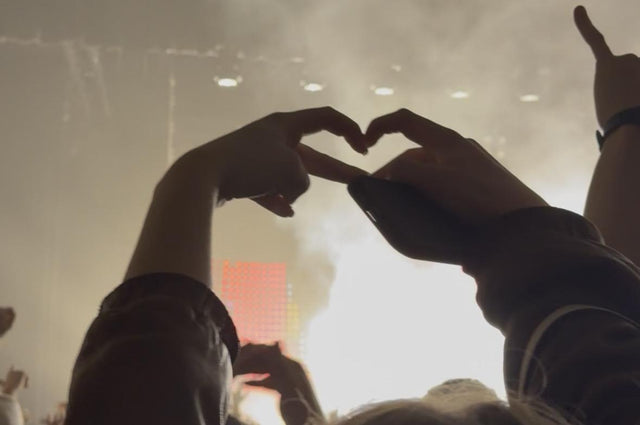
I recently drove 10 hours to Philadelphia with two of my best friends to see George Clanton in concert, one of the last concerts he played before canceling his tour due to personal reasons. The energy at the show was outstanding. Everyone's eyes were glued to the stage, and he was extremely down to earth and engaged with the audience. The ambience of the loud synth and drums filling the room along with the vaporwave inspired visuals created a magnificent floaty and ethereal vibe. I would recommend that anyone given the chance should see him live, even those who are not particularly fans of electronic music— because his versatility makes his songs relatable to a very large audience.


0 Comments
There are no comments yet. Be the first one to post one!