
The Many Lives of a Masterpiece by Georgia Stewart

Some artworks are so oversaturated that it's almost impossible to imagine encountering them for the first time. For artworks like Starry Night, the imagery appears across many places beyond the museum, such as clothing, home ware, advertisements, social media, and even memes. This familiarity changes the way we encounter artworks like these, if we ever physically do at all. This constant reproduction of an artwork may weaken its original meaning and impact, but it also allows it to live many lives and serve many purposes. Does overexposure diminish an artwork, or give it a broader cultural life?
Iconic artworks are often recognizable to people even if they do not know much about the artist, history, original locations, or even the title or year. There is a major difference between being able to identify an artwork and spending enough time with it to understand or interpret it. Extreme familiarity with these works can cause people to mentally categorize them before actually examining them. Going back to the The Starry Night example, the painting seems to have gradually become a general symbol of art itself, creativity, or beauty. Much of the history and intention behind a work like The Starry Night gets lost when it becomes a familiar symbol rather than a specific artwork made under specific conditions.

Vincent van Gogh, The Starry Night, 1889
The endless reproduction of an artwork causes it to shift further from its original appearance, losing characteristics such as exactly replicated color, texture, and scale. The overall presence of the work is lost as well. Online circulation separates the image from its original environment and context, allowing it to appear almost anywhere. Once this separation occurs, the public begins to participate in what the artwork means.

Edvard Munch, The Scream, 1893
In relatively recent years, social media has accelerated the process of reproduction that has existed for many years. Certain qualities, such as recognizable figures, expressive gestures, adaptable compositions, or strong emotions, make artworks easy to circulate and repurpose. Works such as The Scream have become symbols of emotions like anxiety and panic. Small
fragments of artworks, such as the hands in The Creation of Adam, can sometimes be more useful than the complete artwork. Memes and other means of repurposing art remove the artworks from their original contexts and apply them to ordinary contemporary life and experiences. This can, in some ways, flatten the artwork and turn it into a joke, reaction, or single emotion. However, memes can also make historical art approachable, participatory, and relevant to those who might not otherwise engage with it. Each new adaptation gives the artwork a new cultural life, even if that life lacks much connection to the artist’s original intention.

Michelangelo, The Creation of Adam, 1508-1512
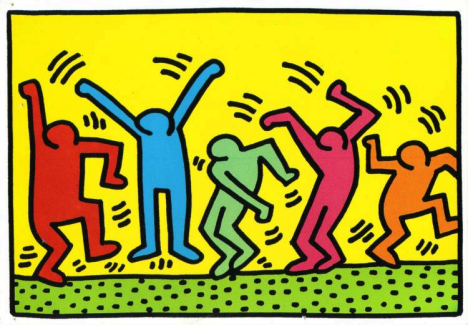
Another common form of reproduction is the commercial reproduction of artworks into merchandise and branded experiences. By placing famous artworks on mugs, T-shirts, tote bags, and phone cases, it is possible that they are being reduced to marketable patterns, but owning these products might also allow more people to form personal connections with art. Reproductions make it possible for people to experience art they may never get the chance to see in person. Here, commercialization and accessibility can exist together without representing two separate outcomes.

Keith Haring, Untitled, 1987
Seeing a famous work of art in person can sometimes feel like meeting a celebrity. Prior familiarity can make the artwork feel more emotionally powerful, but it can also prevent the viewer from seeing it freshly. The original may appear surprisingly small, textured, imperfect, or materially different from its reproductions. This disconnect reveals how the physical artworks and their cultural reproductions often feel like completely different entities.
Can famous art become too familiar to truly see? Reproduction and oversaturation can obscure an artwork's original context, encourage passive viewing, and can reduce complex artworks into easily consumable symbols. This same reproduction has also allowed artworks to remain culturally relevant across time periods, cultures, institutions, and social boundaries. An artwork's meaning does not simply disappear from overexposure. Instead, it becomes divided between its original context and accumulated public uses. A large reason that iconic artworks have remained culturally alive is that people continue to reproduce, commercialize, reinterpret, and even joke about them. Perhaps the most enduring masterpiece is not one protected from change, but one capable of surviving countless transformations and purposes.
0 Comments
There are no comments yet. Be the first one to post one!