
On Slop By Isabella Edmiston
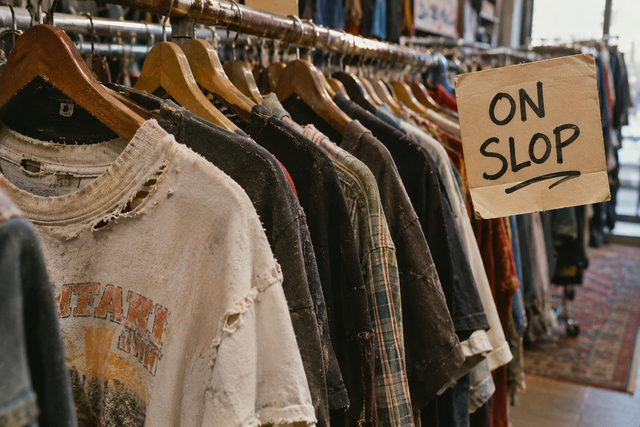
People yearn for idiosyncrasies and for quality. The word “slop” has been thrown around for the past year, which denotes poor quality and its ubiquity. It was considered the word of the year last year, but it still reigns this year. Originally, the word was akin to words like “muck” or “mud” and now it’s associated with consumption. Isn’t that a fun transition?
I think with “slop” is that there are hardly any distinct qualities for someone to latch onto. When I think of what is often designated as “slop” it’s often material objects or aesthetic objects that are meant to appeal to the masses. These things don’t have discernable qualities that make them stand out, but rather they inherit a series of qualities that are meant to please everyone. Books, movies, and clothes are subject to becoming “slop.” It’s both reflective of their ubiquity and quality. There is no creative risk.
The word “slop” evokes a muddy like meal and we automatically associate it with swine. That’s the thing with slop: it’s meant to stretch resources thin and it’s barely below the bare minimum. We feed slop to swine because we do not see them as deserving of “real food.” That’s why people are so insulted when they are offered “slop” in the first place: they see the service of slop as a reflection of their own character.
When I think of “fashion slop,” blandness comes to mind. Blank and poorly made t-shirts, sweaters made with polyester, and jeans that are not designed to last. Our notion of “slop” is more or less the evolution of the “enshittification” term which originated from the internet to denote the poor quality of products. However, could one actually express themselves genuinely with what we consider to be “slop”?
I think this is why people are drawn to thrifting in the first place: to stand out amongst the rest. While I don’t think fashion is the end all be all for self expression, it's still a way that makes you more distinct. Going through vintage pieces you see that those pieces are reflective of the times they were from. Most clothes from the past were designed to last. With the current landscape of fashion, is there anything distinct about a piece from 2026?
0 Comments
There are no comments yet. Be the first one to post one!