
The Salem Witch Trials By Kayla Doria Ward
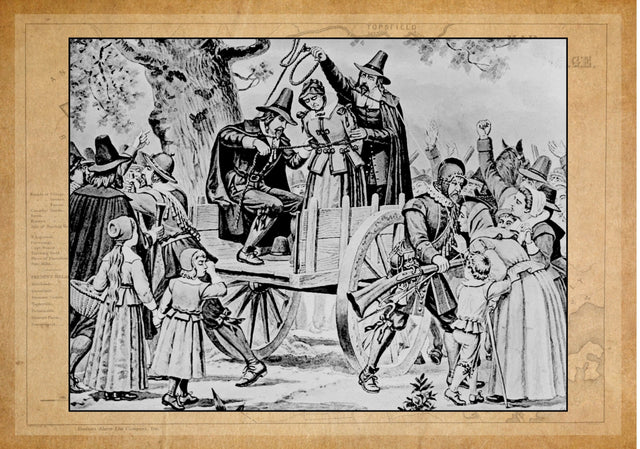

Most people likely know about the Salem Witch Trials, or have learned about them. But how much do you really remember about the causes and casualties of that period?
This spooky season, I decided to go beyond the surface-level facts of the Salem Witch Trials. I wanted to learn not only what exactly happened but also what the tragedies taught/should teach us about mass hysteria, intense religious beliefs, and sexism.
The Beginning
The trials began in Salem Village/Town in January of 1692. Throughout the century in the Massachusetts Bay Colony, many felt Puritan ideals of a “City on a Hill” were slipping away. The people believed “a strong belief in the devil, the recent smallpox epidemic, the ever-present threat of attack by Indigenous tribes and their French allies, and boundary/border disputes between neighbors” were to blame.
The first cases of “witchcraft” were nine-year-old Betty Parris and eleven-year-old Abigail Williams. Notably, Parris was the daughter of Salem Village minister Reverend Samuel Parris, and Williams was his niece. The girls started to fall ill and show unusual symptoms, including “making strange, foreign sounds, huddling under furniture, and clutching their heads.” The girls' parents and neighbors tried both prayer and medicine; when this failed, they began to worry witchcraft may be involved. Word of the illness spread, and soon others began to show the same symptoms as Parris and Williams.

The Use of Courts and Special Courts
In May 1692, Governor William Phips created a special court, the Court of Oyer and Terminer, to oversee these accusations in the village. The court stirred up mass hysteria among the people, which in turn affected the proceedings. One of the most dangerous outcomes of this hysteria was allowing spectral evidence. This meant people who claimed to have experienced visions could use them as legal evidence in testimony.
The first to be tried in the special court was Bridget Bishop of Salem Town. Bishop was found guilty and hanged on June 10th. 18 others were hanged in the three consecutive days that followed. Phips disbanded the special court in October of the same year after receiving “numerous petitions and letters from the accused, their family members, and local ministers, as well as accusations from individuals at the highest levels of society (including the Governor’s own wife!).”

In January of 1693, trials resumed in the Supreme Court of Judicature. The same court used in Massachusetts today. This court did not allow spectral evidence, so it found most of the accused not guilty and released them. In late January, Governor Phips stepped in and issued last-minute reprieves. With this, the Salem Witch Trials were finally over.
Getting Justice
In 1692, the Massachusetts General Court ordered a day of fasting and prayer to atone for the colony's wrongdoings, including the witchcraft trials. Judge Samuel Sewall and 12 jurors apologized for their roles in the Salem witch trials as well. However, the others involved denied any wrongdoing, strongly believing they did what was best for the colony.
In 1711, the Massachusetts General Court cleared many Salem witch trial convictions from 1692. But the official resolution left seven victims convicted. Over the next three centuries, lawmakers gradually declared their innocence, including the last remaining victim, Elizabeth Johnson Jr., in 2022, thanks to a project by local middle school students.
The Takeaway
In total, 150-200 people were jailed for witchcraft. 14 women and 5 men were hanged, one man was tortured to death, and at least five people perished in prison. This was the largest series of witchcraft trials to ever take place in North America, and the last large-scale witch panic to take place in the English colonies.
Women made up approximately 80% of all accused individuals. Many of these women were targeted by the men who controlled Salem because they did not conform to Puritan expectations of “submissive, domestic womanhood.” Other accused groups included elderly women, marginalized groups, outspoken women, and those who challenged social norms (such as Bridget Bishop).

The men in Salem Village held the power to pick and choose who to execute. As magistrates, judges, and clergy, men persecuted the accused women in these trials. The few men who were accused were said to have defied male authority by standing up for the accused wives. Interestingly, some sources claim women began to turn on each other to gain social status and financial benefits.
All in all, these prosecutions were arguably rooted in deep misogyny and religious practices. Belief in the supernatural and practices surrounding the Devil giving certain humans the power to harm others in return for their loyalty was common throughout Europe and was widespread in colonial New England.
Sources
Leclerc, E. (2022). Snitches and witches. Gender & Sexuality in World History.
https://genderhistory.pubpub.org/pub/snitches-and-witches/release/1
Salem Witch Museum. (n.d.). 1692 Salem witch trials history & education.
https://salemwitchmuseum.com/my-account/history-education/
History.com Editors. (2011, November 4). Salem witch trials. HISTORY.
https://www.history.com/articles/salem-witch-trials
Salem Witch Museum. (n.d.). Media.
https://salemwitchmuseum.com/media/
Salem Heritage Trail. (2026). Salem witch trials walking tour.
https://salemheritagetrail.org/salem-witch-trials-walking-tour/

0 Comments
There are no comments yet. Be the first one to post one!