
Who is Contemporary Art Really For? By Georgia Stewart
Pretty much anyone could name three bands, fashion designers, or actors that they consider their favorites, but when it comes to contemporary artists, many people struggle with this question. How many living contemporary artists could the average person even name? And why is this number so low compared to creatives working in other media? This number isn’t low because there are fewer artists now. In fact, we are living in a time where there are more artists and ways to encounter art than ever before. With contemporary art being so visible and accessible now, why does it seem so absent from everyday cultural conversation?
Artists like Basquiat, Warhol, Dalí, and Picasso became widely recognized outside museums and galleries, but today’s most successful artists often become well known inside the art world without reaching that same level of public recognition. Possibly, this kind of influence has just become more fragmented rather than disappearing altogether.

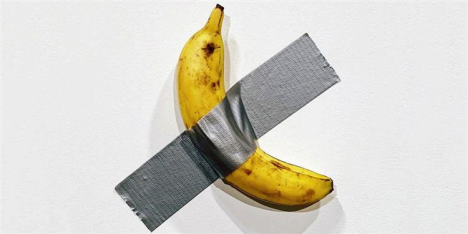
Maurizio Cattelan, Comedian, 2019
Today, our attention is divided across countless forms of visual media, from film and fashion to gaming and social media. Much of contemporary art circulates through galleries, fairs, biennials, and museums, which are spaces many people rarely enter. Much of contemporary art’s success is determined by institutional recognition rather than mass popularity. Maybe this has unintentionally shifted artists’ audiences towards collectors, curators, and other art professionals.

There's a bit of irony in the fact that visual culture has never been easier to access, with museums offering online collections, artists sharing work on social media, and free nights at museums and galleries, yet this increased visibility hasn’t translated into greater public participation in conversations about contemporary art. Accessibility may involve more than just being able to view the art, but also having the ability to interpret it and feel confident enough to discuss it. The barriers surrounding contemporary art may have shifted from physical access to cultural access.

Damien Hirst, The Physical Impossibility of Death in the Mind of Someone Living, 1991
Contemporary art exists within a highly specialized ecosystem of galleries, curators, critics, collectors, museums, and academic institutions. These institutions are essential because they preserve and support art and artists, but it is possible that this system has created an environment in which artists, even unintentionally, produce work that resonates with the people who occupy and manage those spaces. Contemporary art frequently rewards theory, history, and references, and audiences without this background may feel more like observers than participants. Complexity itself is not an issue, as this exists in pretty much every field, but it is possible that contemporary art has become so fluent in its own internal conversation that many people may not feel invited into it.

Joseph Kosuth, One and Three Chairs, 1965
The general population still admires artists and creatives; they may simply be engaging more with designers, photographers, filmmakers, or digital artists than with gallery-based artists. Visual culture has definitely not declined. Instead, the places where people encounter visual culture have changed. Contemporary art is competing with a much larger creative ecosystem than it once was.
Why are contemporary artists not as widely recognizable and talked about today? Perhaps the issue isn’t whether people actually care about art; it's whether the contemporary art world has become disconnected from the spaces where cultural conversations now take place. Maybe the contemporary art world has become so fluent in speaking to itself that it has forgotten how to invite others into the conversation. Is it possible for contemporary art to continue pushing conceptual boundaries while also making more people feel like they are a part of the conversation?
0 Comments
There are no comments yet. Be the first one to post one!